Home » Products » Bitumen Processing » Operating Instructions for Asphalt Drum Decanter Plant

Operating Instructions for Asphalt Drum Decanter Plant

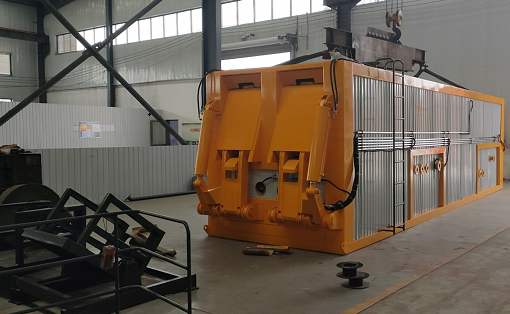
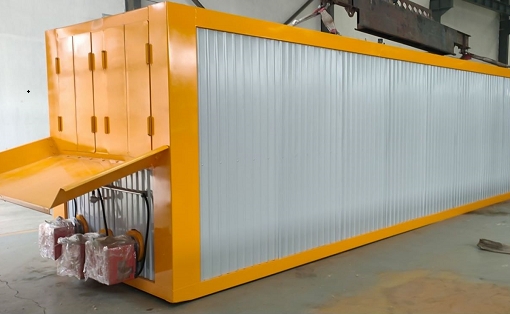
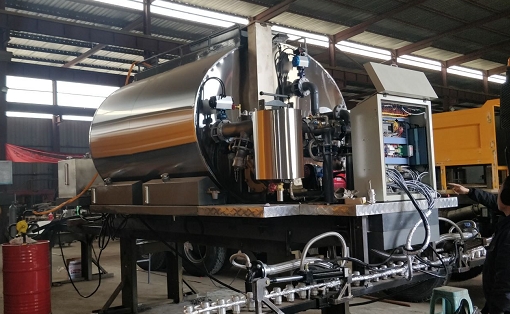
Bitumen drum decanter plant is commonly used in road construction projects. Its operation involves several steps, and the following is a detailed user guide:
Equipment Preparation and Inspection: Before use, ensure the Bitumen drum decanter plant is in good condition. Check all components for damage, especially the clamping device and transmission system.
Place the bitumen drum in the designated stable position on the equipment, ensuring the drum is stable and preventing tipping or slippage during operation.
Bitumen Drum Inspection and Temperature Control: Open the sealed cap of the bitumen drum and carefully check the quality and temperature of the bitumen. The temperature of the bitumen has a significant impact on its fluidity and drum unloading effect.
Use a professional thermometer to measure the temperature of the bitumen, ensuring it is within the safe operating range. Excessive bitumen temperature may damage the equipment and pose a risk of burns to operators.
Equipment Adjustment and Matching: Adjust the height and angle of the drum decanter machine according to the diameter and height of the bitumen drum to achieve a perfect match. This step is crucial for ensuring a smooth drum unloading process.
Ensure the drum unloader’s clamping device fits snugly against the edge of the bitumen drum to provide sufficient clamping force.
Clamping and Unloading Operation: Open the drum unloader’s clamping device and carefully place the jaws into the bitumen drum. Ensure the jaws make full contact with the drum wall for a stable clamping effect.
Slowly move the drum unloader’s jaws upwards until they firmly grip the edge of the bitumen drum. Maintain even force during clamping to avoid damaging the bitumen drum.
Activate the drum unloader’s transmission system to slowly raise the bitumen drum. When the bitumen drum is completely off the ground, continue raising it to an appropriate height for subsequent bitumen pouring or processing.

Rated 4.9/5 based on 495 customer reviews
Share:
Content

Bitumen drum decanter plant is commonly used in road construction projects. Its operation involves several steps, and the following is a detailed user guide:
Equipment Preparation and Inspection: Before use, ensure the Bitumen drum decanter plant is in good condition. Check all components for damage, especially the clamping device and transmission system.
Place the bitumen drum in the designated stable position on the equipment, ensuring the drum is stable and preventing tipping or slippage during operation.
Bitumen Drum Inspection and Temperature Control: Open the sealed cap of the bitumen drum and carefully check the quality and temperature of the bitumen. The temperature of the bitumen has a significant impact on its fluidity and drum unloading effect.
Use a professional thermometer to measure the temperature of the bitumen, ensuring it is within the safe operating range. Excessive bitumen temperature may damage the equipment and pose a risk of burns to operators.
Equipment Adjustment and Matching: Adjust the height and angle of the drum decanter machine according to the diameter and height of the bitumen drum to achieve a perfect match. This step is crucial for ensuring a smooth drum unloading process.
Ensure the drum unloader’s clamping device fits snugly against the edge of the bitumen drum to provide sufficient clamping force.
Clamping and Unloading Operation: Open the drum unloader’s clamping device and carefully place the jaws into the bitumen drum. Ensure the jaws make full contact with the drum wall for a stable clamping effect.
Slowly move the drum unloader’s jaws upwards until they firmly grip the edge of the bitumen drum. Maintain even force during clamping to avoid damaging the bitumen drum.
Activate the drum unloader’s transmission system to slowly raise the bitumen drum. When the bitumen drum is completely off the ground, continue raising it to an appropriate height for subsequent bitumen pouring or processing.
Operating Precautions: Throughout the unloading process, operators should stand in a safe position, avoiding direct contact with the opening of the bitumen drum to prevent burns from splashing bitumen.
Regularly inspect the wear and tear of all parts of the drum unloader and replace severely worn parts promptly to ensure normal operation and extend the equipment’s service life.
After the operation is completed, promptly clean up any residual bitumen and debris on the equipment to keep it clean and hygienic.
Inquiry


    More Road Maintenance

    Asphalt spreader is an irreplaceable tool for highway maintenance. Asphalt spreader is an irreplaceable tool for highway maintenance. Highway maintenance is divided into four categories according to the nature of the project, scale, and technical complexity: minor repair, medium repair, major repair, and improvement. Specific classification:
    (1) Minor repair and maintenance project: preventive maintenance and repair of slightly damaged parts of the highway and all its engineering facilities to keep them in good condition. It is usually planned and carried out daily by the maintenance team within the annual minor repair and maintenance quota funds on a monthly (ten-day) basis.
    (2) Medium repair project: regular repair and reinforcement of general wear and tear and local damage of highway engineering facilities to restore them to their original state. It is usually planned and implemented by grassroots road maintenance agencies on an annual (seasonal) basis.
    (3) Major repair project: periodic comprehensive repair of major damage to highway facilities to fully restore them to the original design standards, or local improvements and individual additions within the original technical level to gradually improve the highway’s traffic capacity. It is usually organized and implemented by grassroots road maintenance agencies or with the help of their superior agencies according to the approved annual project budget.
    (4) Improvement projects are large projects that improve the technical level of roads and their engineering facilities in stages and sections due to their inability to meet traffic volume and load requirements, or significantly improve traffic capacity through improvements. It is usually organized and implemented or completed through bidding by regional road maintenance agencies or provincial road maintenance agencies according to the approved plan and design budget. As a manufacturer of asphalt spreaders, we welcome you to visit us.

    In the field of road construction and maintenance, asphalt, as a core material, directly impacts project progress through efficient storage and transportation. The specialized equipment developed by asphalt drum unloading equipment companies is a key tool for the efficient conversion of asphalt from drums to a liquid state. This type of equipment rapidly transforms solid asphalt into a pumpable liquid state through precise temperature and pressure control, ensuring construction continuity while reducing material waste. This article will analyze the core advantages of this equipment from three dimensions: technical principles, application scenarios, and industry value.
    Technical Principles: Synergistic Effect of Heat Exchange and Pressure Control
    The core of asphalt drum unloading equipment lies in the precise coordination between the heat exchange system and the pressure control module. The equipment uses a built-in heat-conducting oil circulation system to uniformly heat the drummed asphalt to a melting temperature of 160-180℃, while simultaneously using a vacuum pump to remove air from the drum, creating a negative pressure environment. This dual action significantly shortens the asphalt melting time—traditional heating methods require 4-6 hours, while specialized equipment can complete the unloading process in just 1-2 hours. Furthermore, the equipment’s intelligent temperature control system monitors asphalt temperature in real time, preventing material degradation due to localized overheating and ensuring asphalt quality meets construction standards.

    In road construction, waterproofing projects, and other fields, bitumen is a core material, and its storage and transportation directly impact project efficiency. Bitumen bagged melter equipment, as a key tool connecting packaging and use, is particularly important for its performance and adaptability. However, standardized equipment on the market often fails to meet diverse engineering needs. This is where the role of custom asphalt bagged melter equipment manufacturers becomes apparent – ​​solving the matching problem between equipment and application scenarios through customized design.
    Core Functions and Challenges of Bitumen Bagged Melter Equipment The main task of asphalt bagged melter equipment is to efficiently and safely separate asphalt from its packaging bags and transport it to the heating or use stage. This process needs to overcome two major challenges: first, the viscous nature of asphalt makes it prone to residue or blockage within the equipment; second, the differences in packaging bag materials (such as paper and plastic) require specific handling to avoid contamination. Standardized equipment is usually designed for general scenarios, but in actual projects, there are numerous variables such as asphalt specifications, packaging forms, and site space, leading to frequent instances of equipment being unsuitable for specific environments. For example, a municipal engineering project experienced frequent equipment jams and delays due to the use of general-purpose equipment to process high-viscosity asphalt; another waterproofing material factory faced challenges because standardized equipment could not completely separate residues from the special material of its packaging bags, affecting product quality.

    Cold-mix colored asphalt, this new type of colored asphalt pavement, is truly a great product! It’s not only anti-skid, noise-reducing, and anti-fogging, but also particularly environmentally friendly, significantly improving road surface smoothness. In comparison, hot-mix asphalt seems more traditional. So, what are the differences between them? Let’s take a look!
    Major Differences in Raw Materials
    First, the binder in cold-mix colored asphalt is a modified cold-mix binder, which is liquid under normal conditions. Hot-mix colored asphalt oil, on the other hand, is solid and only becomes liquid after heating. This determines the differences in their production processes and usage methods.
    Differences in Production Processes
    Modified cold-mix binder is liquid and can be directly mixed with cold aggregates. Hot-mix asphalt oil and aggregates, however, need to be heated to a certain temperature before mixing. This heating process requires specialized equipment and time!
    Major Differences in Construction Methods
    The construction of cold-mix colored asphalt is not limited by temperature; it can be mixed, spread, and leveled on-site, and finally polished with a grinder. Hot-mix asphalt construction is limited by temperature and time, requiring compaction with pavers and rollers. This process demands a professional team!
    Cure Time Differs Significantly
    Cold-mix asphalt pavements typically require only 1-3 hours of curing time, after which they can be opened to traffic. Hot-mix asphalt pavements, however, require 24 hours of curing time, and traffic should be avoided for at least one day. Therefore, if you are in a hurry, cold-mix asphalt may be more suitable!
    Service Life Differs Significantly
    Cold-mix asphalt pavements generally last 1-3 years. Hot-mix colored asphalt, due to the addition of colorants, will fade after six months. Therefore, if you prioritize aesthetics and durability, hot-mix asphalt may be more suitable.
    In summary, both cold-mix and hot-mix asphalt have their advantages and disadvantages; the choice depends on your specific needs and environmental conditions. Hopefully, this article has helped you better understand the differences between these two types of asphalt!

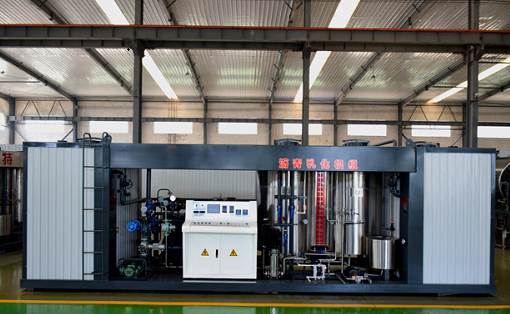
    Emulsified asphalt is an emulsion that disperses asphalt into the water phase to form a liquid at room temperature. This determines that emulsified asphalt has many technical and economic advantages over hot asphalt and diluted asphalt. We know that modified asphalt equipment is a road engineering machinery. In order to better promote users’ understanding of it, today the editor will introduce its characteristics to you so that users can better understand that modified asphalt equipment is used for modified asphalt. It consists of a main machine, a modifier feeding system, a finished product tank, a heat transfer oil reheating furnace and a microcomputer control system. The main machine is equipped with a mixing tank, a dilution tank, a colloid mill and an electronic weighing device. The entire production process is controlled by a computer automatic program. In addition, it can be learned that the product has the advantages of reliable quality, stable performance, accurate measurement, and convenient operation. It is an indispensable new equipment in highway construction. The advantages of asphalt equipment are prominently reflected in its two-way modification effect, that is, while greatly increasing the softening point of asphalt, it also significantly enhances the low-temperature ductility, improves the temperature sensitivity, and has a particularly large elasticity and recovery rate. The modified asphalt equipment has a long service life and a safe and reliable production process. The rotor and stator are specially heat treated, and the service life of the equipment is more than 15,000 hours.

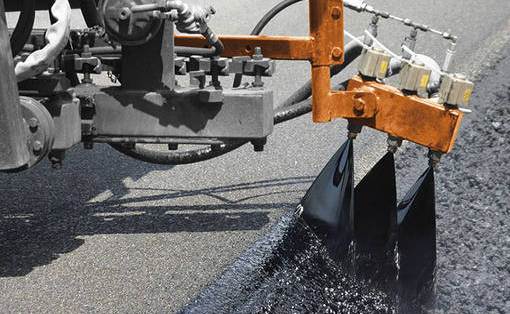
    Asphalt spreaders are primarily used for asphalt paving and road maintenance, including evenly spreading asphalt, heating, and mixing asphalt. Compared to traditional methods, they offer advantages such as high efficiency, high precision, and labor savings.
    Asphalt spreaders are specialized construction machinery used for asphalt paving and road maintenance, and are widely used in road construction and maintenance. Their primary functions include evenly spreading asphalt, heating, and mixing asphalt, significantly improving the efficiency and precision of asphalt paving and road maintenance.
    I. Basic Functions of Asphalt Spreaders
    Asphalt spreaders utilize advanced control systems and nozzle designs to achieve precise metering and uniform asphalt distribution. Furthermore, they are equipped with heating and mixing systems that heat and mix the asphalt during the application process, ensuring its quality and uniformity. These features make asphalt spreaders crucial in road construction and maintenance.
    II. Application Scenarios of Asphalt Spreaders
    Asphalt spreaders are suitable for a variety of road construction and maintenance applications, such as highways, urban roads, and airport runways. It can complete large-scale asphalt paving and road maintenance work in a short period of time, greatly improving work efficiency. Furthermore, asphalt spreaders can be flexibly adjusted to varying road and climatic conditions, ensuring construction quality and safety.
    III. Advantages of Asphalt Spreaders
    Compared to traditional methods, asphalt spreaders offer the following advantages: First, they enable highly efficient asphalt paving and road maintenance, significantly shortening construction timelines. Second, asphalt spreaders utilize advanced control systems and nozzle designs, enabling precise metering and uniform asphalt distribution, improving construction quality. Finally, asphalt spreaders can save significant manpower and material resources, reducing construction costs.
    IV. Development Trends and Future Prospects of Asphalt Spreaders
    With the increasing demand for road construction and maintenance, the development trend of asphalt spreaders is becoming increasingly pronounced. In the future, asphalt spreaders will place greater emphasis on environmental protection and energy conservation, utilizing more advanced technologies and materials to reduce their environmental impact. Furthermore, with the advancement of intelligent technology, asphalt spreaders will also achieve more intelligent control and monitoring, improving construction efficiency and quality. In short, asphalt spreaders have broad application prospects in future road construction and maintenance.