Home » Products » Bitumen Processing » Preparation of Asphalt Emulsifier Aqueous Solution

Preparation of Asphalt Emulsifier Aqueous Solution

Asphalt emulsifier aqueous solution, also known as soap solution, is produced using water, asphalt, and asphalt emulsifier as the three main raw materials for emulsified asphalt. Today, we’ll briefly discuss the preparation of the emulsifier aqueous solution. Medium-crack asphalt is relatively simple; currently, no additives are needed, and it can be produced using only these three raw materials. The emulsified asphalt required by the highway industry, specifically the slow-crack, fast-setting type, is more complex to produce. Today, we’ll take slow-crack, fast-setting emulsified asphalt as an example to discuss the preparation of the asphalt emulsifier aqueous solution.

Rated 4.9/5 based on 308 customer reviews
Share:
Content

Asphalt emulsifier aqueous solution, also known as soap solution, is produced using water, asphalt, and asphalt emulsifier as the three main raw materials for emulsified asphalt. Today, we’ll briefly discuss the preparation of the emulsifier aqueous solution. Medium-crack asphalt is relatively simple; currently, no additives are needed, and it can be produced using only these three raw materials. The emulsified asphalt required by the highway industry, specifically the slow-crack, fast-setting type, is more complex to produce. Today, we’ll take slow-crack, fast-setting emulsified asphalt as an example to discuss the preparation of the asphalt emulsifier aqueous solution.
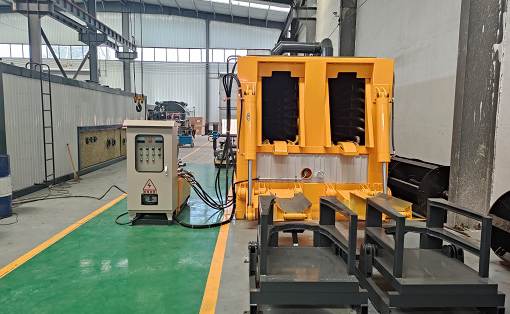
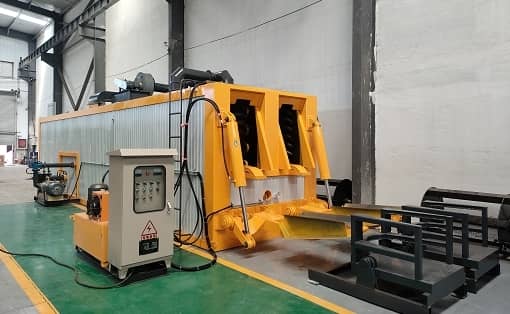
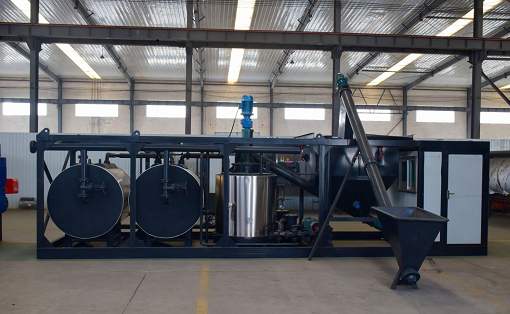
The specific steps and process are as follows: Emulsified Asphalt Production Equipment (white is the soap solution tank)
1. Calculate the amounts of water, asphalt emulsifier, and hydrochloric acid based on the production volume, soap solution tank capacity, and the measurement of asphalt emulsifier used. It is important to note that the effective content of asphalt emulsifier and hydrochloric acid should be considered in the calculation.
2. Heat the water to 60-70℃. To ensure emulsification, the water in the soap solution tank needs to be kept at a constant temperature.
3. Add the asphalt emulsifier according to the measurement and stir until dissolved.
4. Gradually add hydrochloric acid and measure the pH value.
5. Stir until homogeneous, with a uniform appearance, no undissolved solid particles, and a pH value that meets requirements.
Slow-setting, fast-curing asphalt emulsifier
These five steps are essential. The preparation of the asphalt emulsifier aqueous solution is crucial to the success of asphalt emulsification. During this process, we should pay attention to:
(1) The appropriate proportions and accurate measurement of various raw materials.
(2) The order of adding raw materials.
(3) The temperature and pH value of the asphalt emulsifier aqueous solution.
These issues are simple for experienced production workers; they are easily handled. However, safety issues during the production process should also be considered.
Inquiry


    More Road Maintenance

    Water is one of the raw materials of the modified asphalt storage tank, and it is distributed in various components of the modified asphalt storage tank equipment. According to the components where water is distributed, the anti-cold measures are explained one by one. The water tank of the modified asphalt storage tank, the water inside the water tank is released through the filter valve. Some instruments of the modified asphalt storage tank do not have a filter valve to save the cost of the equipment. The modified asphalt storage tank can only be drained by loosening the flange bolts at the bottom. The water pump of the modified asphalt storage tank mentioned here includes a hot water pump and a circulating water pump. This type of water pump for the modified asphalt storage tank generally uses a pipeline centrifugal pump. There is a sewage outlet at the bottom of the pipeline centrifugal pump. The modified asphalt storage tank pays attention to the sewage treatment of the sewage outlet at the bottom of the pump. The modified asphalt storage tank emulsion tank generally uses a cone bottom. However, in order to better process the modified asphalt storage tank coefficient, the inlet and outlet are usually not placed at the bottom of the modified asphalt storage tank. Emulsion (mostly water) will remain at the bottom of the tank, and this part of the residual liquid in the modified asphalt storage tank must be discharged through the filter valve at the bottom. Emulsion pump for modified asphalt storage tank There are basically two types of emulsion pumps for modified asphalt storage tank equipment on the market, gear pumps or centrifugal water pumps. Gear pumps can only discharge the liquid inside the pump through the connection flange of the pipeline. The centrifugal water pump for modified asphalt storage tanks uses its own sewage outlet for sewage treatment. The first four items of modified asphalt storage tanks with basic knowledge are basically discharged, and the modified asphalt storage tanks will focus on the latter types. Modified asphalt storage tank colloid mill There will also be residual emulsion or water inside the modified asphalt storage tank colloid mill. The gap between the stator and rotor of the colloid mill is within 1mm. If there is a little residual water in the modified asphalt storage tank, it will cause the accident of frozen modified asphalt storage tank. The residue in the colloid mill can be treated by loosening the connection bolts of the finished product pipeline.

    The LB1500 forced asphalt mixing plant, a flagship product of Sinoroader, demonstrates unparalleled performance advantages. Its powerful mixing capacity efficiently meets the construction needs of various large-scale road projects. The equipment utilizes advanced forced mixing technology, with specially designed mixing blades ensuring thorough mixing of aggregate, asphalt, and powder during the mixing process, resulting in highly uniform asphalt concrete with consistent quality and superior performance, providing a solid foundation for road durability and stability.

    In terms of metering, our LB1500 is equipped with high-precision sensors and an intelligent control system. This allows for precise metering of aggregate, asphalt, and powder within extremely tight tolerances, ensuring precise batching, effectively avoiding material waste and reducing production costs. Furthermore, the equipment features efficient drying and heating systems that quickly dry and heat aggregate to the desired temperature, improving production efficiency and adapting to aggregates with varying moisture contents. Over the years, we have earned a good reputation in the international market with our reliable product quality and excellent after-sales service, and our products are exported to more than 30 countries and regions. Our close cooperation with foreign customers not only provides strong support for road construction in their countries, but also promotes exchanges and progress in technology, management and other aspects between the two parties.

    I. The Impact of Temperature on Asphalt Laying
    Temperature is a crucial parameter in asphalt laying. Generally, the laying temperature should be between 5-35 degrees Celsius to ensure surface quality. If the temperature is too low, the following problems will occur:
    1. Asphalt will not flow easily. At low temperatures, the asphalt will solidify and become difficult to flow, affecting the uniformity of the laying process.
    2. Reduced construction quality. The asphalt surface will be rough, leading to cracks and potholes, which will affect road use.
    3. Increased waste. Lower temperatures increase the hardness of the asphalt, making construction more difficult, increasing the amount of asphalt needed, and raising construction costs.
    II. How low is “too low”?
    So, how cold is considered “too cold”? Actually, the specific value for “too low” depends on different situations. Generally, the following are some common situations:
    1. The temperature of the asphalt mixture should be between 120-165 degrees Celsius. If the temperature is below this range, the fluidity of the mixture will decrease, increasing the difficulty of construction.
    2. The construction temperature for asphalt pavement should be between 10-30 degrees Celsius. If the temperature is below this range, the asphalt will harden, making it difficult to lay properly and easily causing pavement cracking.
    Therefore, the specific temperature will vary depending on the specific asphalt paving situation. If you need to pave asphalt, please consult a professional construction company in advance and understand the local temperature conditions.

    The viscosity of emulsified asphalt equipment decreases with the increase of temperature during the production process. The power viscosity of emulsified asphalt equipment is about twice as high as every 12℃ increase. During processing, the culture medium asphalt barrel should be heated to liquid before demulsification. In order to better integrate the demulsification emulsified asphalt equipment capacity of the colloid solution mill, the culture medium asphalt barrel power viscosity is generally controlled to be about 200cst. The lower the temperature, the higher the viscosity, which increases the pressure of the asphalt barrel pump and the colloid solution mill, and the emulsion cannot be demulsified. However, on the other hand, in order to prevent the emulsified asphalt equipment from weaning when the finished product water evaporates, it is unlikely to overheat the culture medium asphalt barrel temperature. Generally, the finished product temperature at the inlet and outlet of the colloid solution mill should be less than 85℃.
    One of the important methods to control the temperature and viscosity of emulsified asphalt equipment during processing is based on this. Everyone must carry out scientific operation according to the instructions of the emulsified asphalt equipment, so that the characteristics of the emulsified asphalt equipment can be fully presented. The development trend of the drying theory of emulsified asphalt equipment requires the stone resources to be processed, dried and heated. The reason for the emulsified asphalt equipment is that the quality of wet raw materials does not meet the requirements of asphalt mixture production and processing technology equipment companies.

    Some of the equipment of emulsified modified bitumen equipment are as follows. The specially made bitumen filter can effectively filter the residues and dirt in the high-temperature culture medium bitumen to avoid damage to the subsequent equipment. The emulsified modified bitumen equipment adopts a spiral plate type or a shell and tube heat exchanger to quickly heat the culture medium bitumen through high-temperature heat transfer oil to meet the needs of the production process. The emulsified modified bitumen equipment is heated in the storage tank to prevent the bitumen from aging due to long-term high-temperature heating and exposure to the air. The sulfate generated during the production process of the emulsified modified bitumen equipment is very limited, reducing air pollution.
    The emulsified modified bitumen equipment sends the modified material manually poured into the dumping bin to the bitumen batching tank by wind or spiral. It can be equipped with a metering and calibration system. The emulsified modified bitumen equipment thickener is automatically or manually added. The emulsified modified bitumen equipment can be equipped with a metering and calibration system. Emulsified modified bitumen equipment transportation and metering and calibration system, the emulsified modified bitumen equipment adds the set bitumen amount to the batching tank through the frequency converter and computer interlock. The emulsified modified bitumen equipment and bitumen steam flowmeter use big brand products to ensure the preparation.