Home » Products » Bitumen Processing » Road Asphalt Crack Filler: Year-Round Protection – High Temperature Resistance and Low Temperature Resistance

Road Asphalt Crack Filler: Year-Round Protection – High Temperature Resistance and Low Temperature Resistance

Road asphalt crack filler, a material specifically designed for repairing road cracks, possesses unique properties that allow it to maintain road smoothness and safety throughout the changing seaso...
Rated 4.9/5 based on 384 customer reviews
Share:
Next:
Content

Road asphalt crack filler, a material specifically designed for repairing road cracks, possesses unique properties that allow it to maintain road smoothness and safety throughout the changing seasons. Its “high temperature resistance, low temperature resistance” characteristic provides effective protection for roads under extreme weather conditions.
High Temperature Resistance: Resilient Support in the Summer Heat
In the sweltering summer, road surface temperatures often soar, posing a severe challenge to road materials. Traditional road repair materials tend to soften, deform, or even flow at high temperatures, failing to effectively fill cracks and potentially exacerbating road damage. Road asphalt crack filler, however, ensures its stability at high temperatures through a special formula and process. Even under extreme temperatures, it maintains sufficient strength and toughness, without softening or flowing, effectively sealing cracks, preventing moisture and debris intrusion, and further protecting the road structure.
Low Temperature Resistance: Reliable Protection in the Winter Cold
The harsh winter also poses a challenge to road materials. In low-temperature environments, many materials become brittle and prone to cracking. Road asphalt crack sealant, through optimized chemical composition and physical structure, maintains good flexibility and elasticity even at low temperatures. This means that even under extreme low-temperature conditions, the sealant will not crack due to shrinkage or brittleness, thus effectively and continuously sealing cracks, preventing frost heave damage caused by moisture penetration, and maintaining road smoothness and driving safety.
Four Seasons Protection: A Comprehensive Road Maintenance Solution
The “high-temperature non-softening, low-temperature non-cracking” properties of road asphalt crack sealant make it a road maintenance material suitable for all seasons. Whether in the sweltering summer or the freezing winter, it provides stable and effective protection for roads. Furthermore, this material has advantages such as easy application, rapid curing, and good durability, greatly improving the efficiency and quality of road repairs.
In summary, road asphalt crack sealant, with its unique performance advantages, has become a leader in the field of road maintenance. It not only copes with the challenges brought by seasonal changes but also provides a solid guarantee for road safety and smooth traffic. With continuous technological advancements and the expansion of application areas, road asphalt crack sealant will undoubtedly play an even more important role in future road maintenance.

Inquiry


    More Road Maintenance

    The synchronous chip seal truck is a specialized vehicle capable of simultaneously and precisely applying asphalt binder and aggregate to the road surface. Its core value lies in “synchronization”—the asphalt and aggregate contact and bond almost instantaneously, forming an initial interlocking structure. Compared to traditional step-by-step construction, this process significantly improves the asphalt’s coating effect and bonding strength on the aggregate, resulting in a denser, more wear-resistant, and skid-resistant seal.
    Its main functions include preventative maintenance (such as treating minor cracks and preventing water damage), corrective maintenance (improving road surface skid resistance), and serving as a stress-absorbing or wearing course layer for newly constructed roads. Understanding its working principle and application scenarios is a prerequisite for scientific procurement and use.
    Working Principle Revealed: Like a “road doctor,” it simultaneously sprays asphalt binder and aggregate to form a robust, waterproof, and skid-resistant layer, extending road surface life and making driving safer!
    Key operational points to remember: Before construction, check the equipment condition to ensure the asphalt temperature matches the aggregate size; maintain a constant speed while driving, control the spray volume to avoid waste or insufficient application; clean up residue promptly after completion to prevent blockages.
    Daily maintenance is essential: Regularly inspect the hydraulic system, spray boom, and aggregate bin, and replace worn parts promptly; take precautions against freezing in winter to prevent equipment damage.
    The use of synchronous chip seal asphalt is a comprehensive undertaking that integrates mechanical knowledge, materials science, and construction technology. The organic combination of excellent equipment, qualified materials, and standardized operation enables synchronous chip seal technology to truly provide roads with a durable and reliable “protective layer,” achieving innovative economic and social benefits.

    As -20°C temperatures blanket northern China, an innovative practice integrating green materials and digital sensing is quietly reshaping highway maintenance in these areas. Industrial solid waste is being transformed into cold-resistant “smart patches,” which, combined with microchips embedded in the road surface, not only allow winter repairs to proceed smoothly but also mark a crucial step towards green and intelligent transportation infrastructure maintenance. This is not only a technological breakthrough but also a vivid illustration of the transformation of development methods.
    It is understood that the core material used in this test is an environmentally friendly asphalt that “grows on solid waste.” Industrial solid waste such as fly ash and coal gangue account for 60%-65% of its raw materials. Through independently developed modification technology, it enables normal construction even in temperatures as low as -20°C.
    “Traditional hot-mix asphalt requires temperatures of 130℃ to 160℃, while ordinary cold-mix asphalt basically stops working below 0℃. This new material breaks free from these temperature constraints,” explained on-site technicians. This not only solves the problem of road repair in cold regions during winter but also significantly reduces raw material costs—by 15%-20% compared to traditional materials, labor and energy costs are reduced by over 20%, and overall maintenance costs are reduced by approximately 20%-25%.
    The repaired road surface can be opened to traffic 1-2 hours after compaction, reaches its design strength within 24 hours, and has a durability period of 3-5 years, three times that of ordinary cold-mix asphalt. This means that road “wounds” heal faster and more firmly, making repeated repairs a thing of the past.

    The function of slurry seal is to use appropriately graded stone chips or sand, fillers (cement, lime, fly ash, stone powder, etc.) and emulsified asphalt, admixtures and water, and mix them in a certain proportion to form a flowing asphalt mixture, which is evenly spread on the road surface to form an asphalt seal. This seal is mainly used for roads in rainy areas, especially when the gaps in the asphalt surface layer are large and easy to seep water, the slurry seal can effectively solve this problem.
    In addition, after the base layer is laid, if the asphalt surface layer cannot be laid in time and traffic needs to be opened, the slurry seal also plays a key role. It can temporarily close the road surface to prevent rainwater from penetrating, while protecting the base layer from damage. The slurry seal has strong fluidity and can better adapt to various road conditions to ensure construction quality and efficiency.
    Compared with the viscous seal, the slurry seal has higher adaptability and flexibility. Due to its poor fluidity, the viscous seal is more difficult to spread evenly during construction, and it is more likely to flow in a humid environment, affecting the construction effect. The slurry seal, due to its strong fluidity, can better cover the entire road surface and ensure the uniformity and integrity of the seal.
    In practical applications, the slurry seal also has the advantages of fast construction speed and low cost. Due to its good fluidity, less equipment and manpower are required during construction, which greatly shortens the construction period. In addition, the material cost of the slurry seal is relatively low, which effectively controls the overall construction cost.
    Therefore, when choosing the seal material, the slurry seal has become a more ideal choice due to its excellent performance and economy. Whether it is for road maintenance in rainy areas or for base protection, the slurry seal can play an important role in ensuring the safety and service life of the road.

    Asphalt, a black, viscous mixture obtained through crude oil fractionation, is a key component of asphalt used in the construction of roads, streets, and other infrastructure. Modified asphalt is chemically engineered to deliver optimal performance, with increased resistance to permanent deformation, particularly in asphalt mixes used in challenging or heavily trafficked locations.
    Market Driver Analysis
    The increasing adoption of modified asphalt in various industries, including roads and construction, is a key factor driving market growth.
    Increasing demand for modified asphalt in the waste management, water management, and industrial sectors is also driving market growth.
    Rapid industrialization in emerging economies and increased road construction, repair, and maintenance activities are driving the growing demand for modified asphalt products.
    In addition, growing awareness of sustainable building materials is contributing to market growth. Polymer-modified asphalt offers environmental benefits compared to traditional asphalt, such as reduced energy consumption, a lower carbon footprint, and improved recyclability. Modified Asphalt Market Segment Analysis
    By product type, modified asphalt is categorized into paving grade, hard grade, polymer-modified asphalt, and emulsified asphalt.
    By application, the modified asphalt market is segmented into road construction, building construction, and other applications. Road construction applications account for the largest market share.
    Modified Asphalt Market Regional Analysis
    Currently, the Asia-Pacific region holds a significant share of the global asphalt market. Economies such as China and India are also experiencing the fastest population growth, leading to increased traffic volume and a surge in demand for modified asphalt.
    The modified asphalt market research report published by Betzers Consulting includes a comprehensive analysis of the modified asphalt market size and growth trends, the current state of the industry, the rankings and market shares of major manufacturers, and segment analysis, including type, application, regional market size and market share. It also forecasts future development trends for the modified asphalt market.

    From the current point of view, road construction machinery has bottomed out and asphalt meltering equipment has risen rapidly. In recent years, highway construction and maintenance departments have a strong awareness of using asphalt mixing equipment, especially in developed coastal areas such as Beijing, Shanghai, Jiangsu, Zhejiang, etc. In addition, these regions have a fast economic growth rate, relatively developed industry, and strong comprehensive economic strength. Therefore, the consumption of asphalt mixing equipments in these regions has always been at the forefront of the country. With the rapid development of highway construction and the increase in demand for asphalt, barreled asphalt has been widely used for its convenient transportation and easy storage. In particular, most of the high-performance imported asphalt used in high-grade highways is in barrel form, which requires an asphalt meltering equipment with fast melting speed, clean de-barreling, and can prevent asphalt aging. my country’s highway construction has achieved remarkable results, among which mechanized production has contributed greatly. Different types of asphalt mixers and bitumen meltering equipment are selected for the characteristics of large highway pavement construction and tight construction period. With the rapid development of my country’s economy, the further extension of expressways, and the large-scale development of western construction, the central and western regions have become new investment hotspots. While paying attention to the market in the developed eastern regions, domestic road construction machinery manufacturers have also increased their efforts to develop the central and western markets, creating new highlights for the domestic asphalt mixing plants consumer market. In summary, my country’s asphalt mixing plant sales market has begun to move westward with the westward movement of investment hotspots. As the market center of gravity gradually shifts westward, the market in the western region is gradually heating up. The self-heating integrated structure, hot air barrel melting and bitumen barrel flipping technology in the asphalt barrel removal equipment are our company’s self-heating integrated structure. The thermal oil furnace used in the old equipment is perfectly integrated with the asphalt barrel removal equipment body, which reduces the volume of the entire set of equipment, greatly reduces equipment investment, saves equipment space and transfer transportation costs.

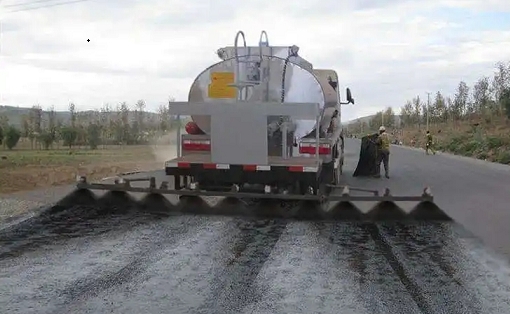
    Asphalt spreader is used to spread the penetration oil, waterproof layer and bonding layer of the bottom layer of asphalt pavement of high-grade highway. It can also be used for the construction of county and township highway oil roads with layered paving technology. It consists of a car chassis, an asphalt tank, an asphalt pumping and spraying system, a thermal oil heating system, a hydraulic system, a combustion system, a control system, a pneumatic system, and an operating platform.
    Knowing how to properly operate and maintain the asphalt spreader can not only extend the service life of the equipment, but also enable the construction project to proceed smoothly. So what problems should the asphalt spreader pay attention to when working? The technicians of Gaoyuan Road Construction Machinery Equipment Co., Ltd. give you tips:
    1). Before use, please check whether the position of each valve is accurate and make preparations before work. After starting the motor of the asphalt spreader, check the four thermal oil valves and the pressure gauge. After everything is normal, start the engine and the power take-off starts to work. Test the asphalt pump and circulate for 5 minutes. If the pump head shell is hot, slowly close the thermal oil pump valve. If the heating is insufficient, the pump will not turn or make noise. In this case, the valve needs to be opened to continue heating the asphalt pump until it can operate normally. During the working process, the asphalt liquid must be kept at a working temperature of 160~180℃, and it cannot be filled too full (pay attention to the liquid level pointer during the injection of asphalt liquid, and check the tank mouth at any time). After the asphalt liquid is injected, the filling port must be closed tightly to prevent the asphalt liquid from overflowing during transportation.
    2). During use, asphalt may not be pumped in. At this time, it is necessary to check whether the interface of the asphalt suction pipe is leaking. When the asphalt pump and pipeline are blocked by solidified asphalt, a blowtorch can be used for baking, and the pump must not be forced to turn. When baking, care should be taken to avoid directly baking the ball valve and rubber parts.
    3). When spraying asphalt, the car should be driven at a low speed. Do not step on the accelerator hard, otherwise it may cause damage to the clutch, asphalt pump and other components. If 6m wide asphalt is spread, pay attention to obstacles on both sides at any time to prevent collision with the spreading pipe. At the same time, the asphalt should be kept in a large circulation state until the spreading work is completed. After the work is completed every day, if there is any remaining asphalt, it must be returned to the asphalt pool, otherwise it will solidify in the tank and cannot work next time.
    4). In addition, the emulsifier must also pay attention to daily maintenance:
    1. The emulsifier and delivery pump and other motors, agitators, and valves should be maintained daily.
    2. The emulsifier should be cleaned after work every day.
    3. The speed regulating pump used to control the flow should be regularly tested for accuracy, and adjusted and maintained in time. The asphalt emulsifier should regularly check the matching clearance between its stator and rotor. When the minimum clearance specified by the machine cannot be reached, the stator and rotor should be replaced.
    4. If the equipment is out of use for a long time, the liquid in the tank and pipeline should be emptied (the emulsifier aqueous solution should not be stored for a long time), the hole covers should be tightly closed, kept clean, and the running parts should be filled with lubricating oil. When it is used for the first time or when it is used again after a long period of inactivity, the rust in the tank should be removed, and the water filter should be cleaned regularly.
    5. Regularly check whether the terminal in the electric control cabinet is loose, whether the wires are worn during shipment, and remove dust to avoid damage to the machine parts. The frequency converter is a precision instrument. Please refer to the instruction manual for specific use and maintenance.
    6. There is a heat transfer oil coil in the emulsifier water solution heating stirring tank. When injecting cold water into the water tank, the heat transfer oil switch should be turned off first, and then the switch should be turned on to heat after adding the required amount of water. Pouring cold water directly into the high-temperature heat transfer oil pipeline can easily cause the weld to crack.

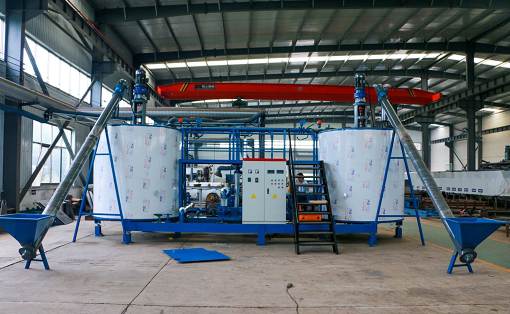
    Emulsified asphalt is an emulsion that disperses asphalt into the water phase to form a liquid at room temperature. This determines that emulsified asphalt has many technical and economic advantages over hot asphalt and diluted asphalt. We know that modified asphalt equipment is a road engineering machinery. In order to better promote users’ understanding of it, today the editor will introduce its characteristics to you so that users can better understand that modified asphalt equipment is used for modified asphalt. It consists of a main machine, a modifier feeding system, a finished product tank, a heat transfer oil reheating furnace and a microcomputer control system. The main machine is equipped with a mixing tank, a dilution tank, a colloid mill and an electronic weighing device. The entire production process is controlled by a computer automatic program. In addition, it can be learned that the product has the advantages of reliable quality, stable performance, accurate measurement, and convenient operation. It is an indispensable new equipment in highway construction. The advantages of asphalt equipment are prominently reflected in its two-way modification effect, that is, while greatly increasing the softening point of asphalt, it also significantly enhances the low-temperature ductility, improves the temperature sensitivity, and has a particularly large elasticity and recovery rate. The modified asphalt equipment has a long service life and a safe and reliable production process. The rotor and stator are specially heat treated, and the service life of the equipment is more than 15,000 hours.