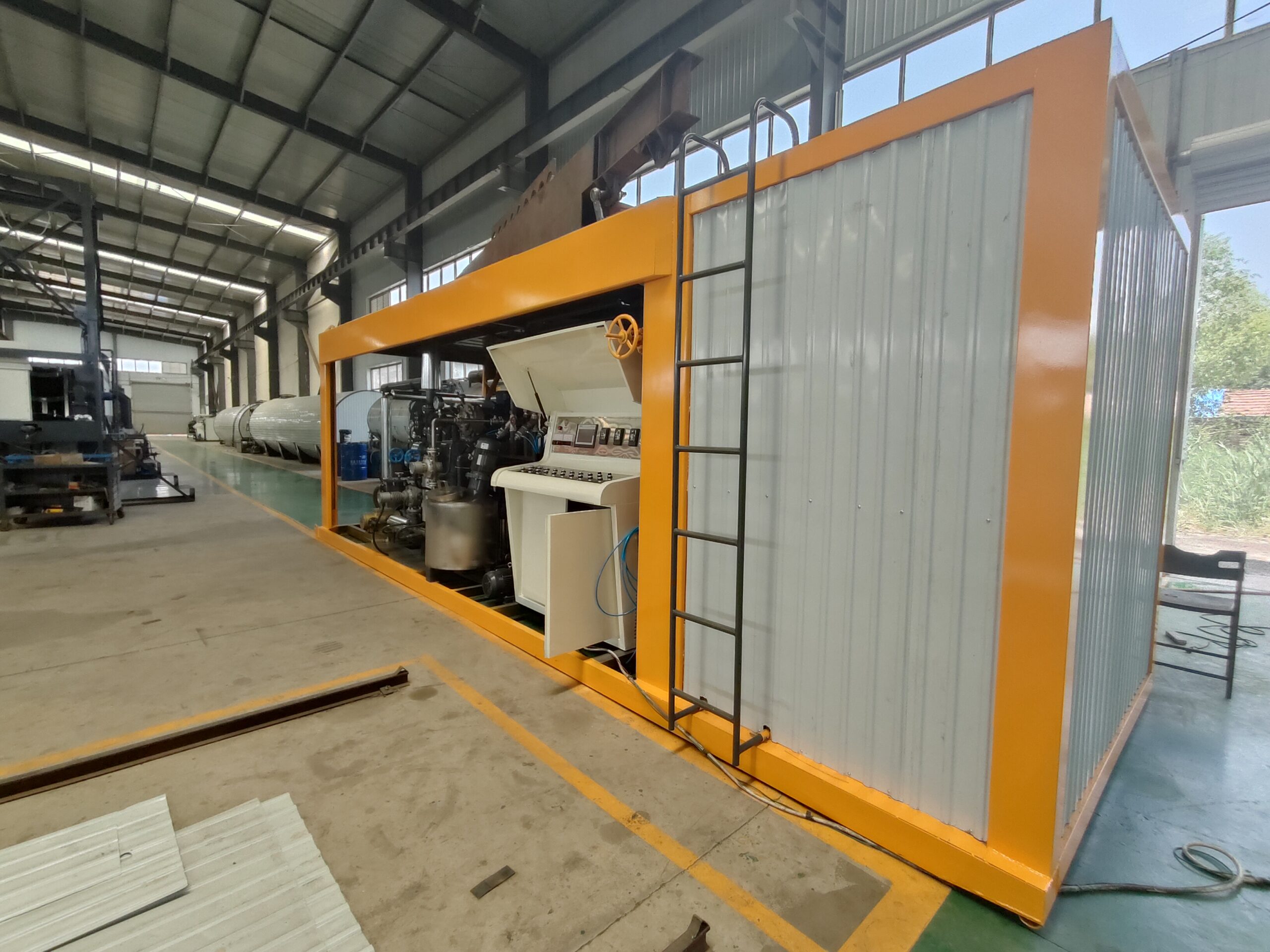
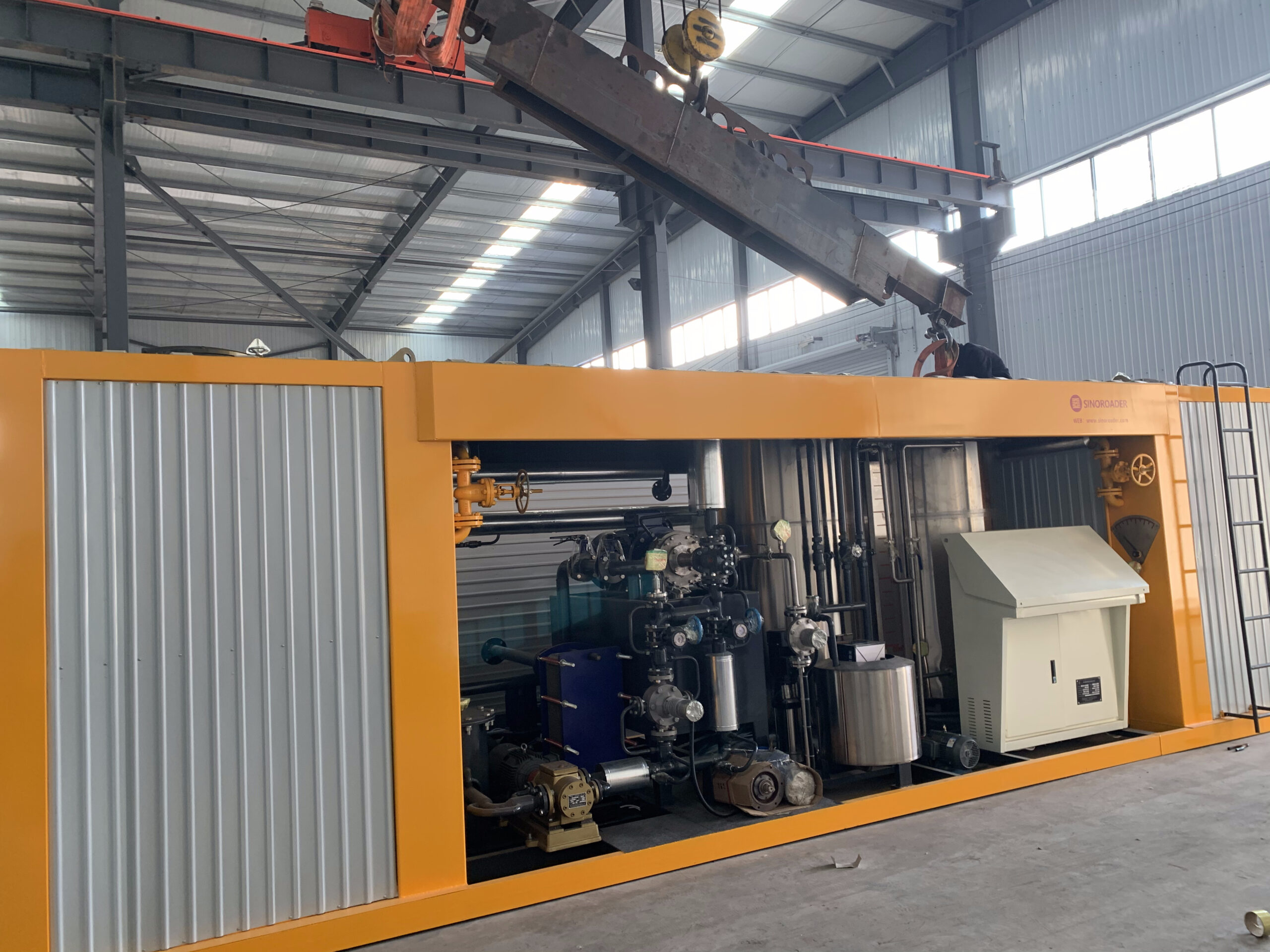
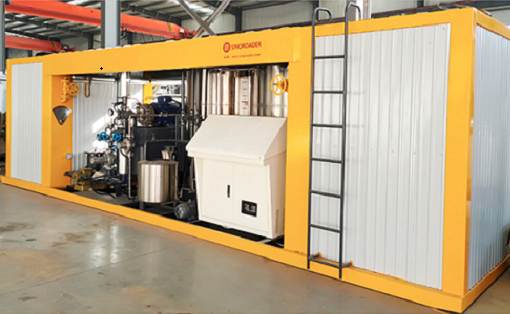
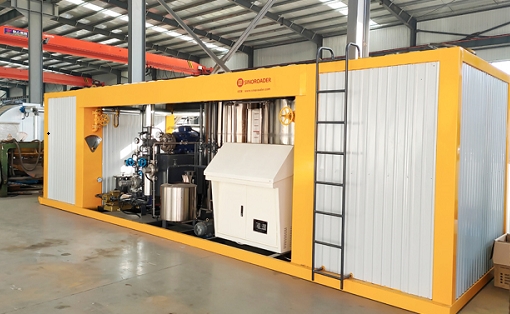
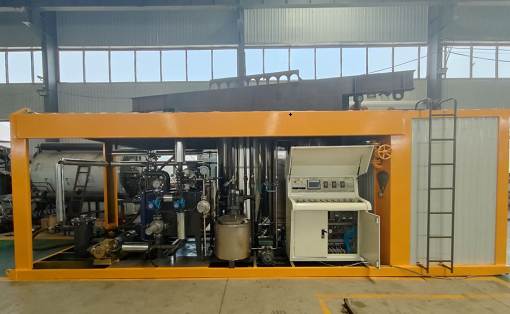
emulsified asphalt equipment

The surface tension of asphalt and water varies greatly, and asphalt and water will not mix at room temperature or high temperatures. However, when the emulsified asphalt is subjected to high-speed mechanical centrifugation, shearing, and impact, it forms particles with a size of 0.1-5 microns and disperses them into a water medium containing a surfactant (emulsifier stabilizer). Because the emulsifier adsorbs on the surface of the emulsified asphalt particles, it reduces the interfacial tension between water and asphalt, allowing the asphalt particles to be dispersed in the surfactant-containing water medium (forming a stable dispersion in the water). Emulsified asphalt equipment produces an oil-in-water emulsion. The dispersion is brown, with asphalt as the dispersed phase and water as the continuous phase, and has good fluidity at room temperature.
Precautions for Using Emulsified Asphalt Equipment
1. Before spraying, the equipment must be checked for correct valve position. The hot asphalt added to the emulsified asphalt equipment must be operated within the temperature range of 160-180°C. The heating device can be used for long-distance transportation or long-term operation, but it cannot be used as an oil melting furnace.
2. When using a burner to heat asphalt in an emulsified asphalt plant, the asphalt level must exceed the upper surface of the combustion chamber, otherwise the combustion chamber will burn out. The emulsified asphalt plant must not be overfilled. The oil filler cap must be tightened to prevent asphalt spillage during transport.
4. When using the front control console, the switch should be set to front control. In this case, the rear control console can only control the nozzle raising and lowering.

In the field of road construction, the technical adaptability of emulsified asphalt production equipment directly affects the efficiency of the project. This article analyzes the technical path for efficient production from three dimensions: equipment selection, core components, and cross-industry technology migration.
I. Equipment type and technical adaptability
Mainstream equipment is divided into mobile and fixed types. The ZMLR6000 equipment adopts a 304 stainless steel tank and a thermal oil heating system. The ±0.5% ratio accuracy meets the fineness requirements of high-grade roads ≤5μm, which is suitable for field operations. The YK6 unit realizes dual-mode heating through the RH6 colloid mill, heats to 100℃ within 45 minutes, supports continuous production of 20%-70% solid content, and has a daily production capacity of 120 tons, which is more suitable for small and medium-sized projects.
II. Core component technology breakthroughs
1. High-speed shear system: The German imported colloid mill adopts a stepped internal tooth structure with a rotation speed of 10,000rpm. The 0.05mm shear gap ensures that the asphalt particles are refined to 1-5μm, and the emulsion stability is improved by 30%.
2. Temperature control and energy-saving design: The waste heat recovery system reduces energy consumption by 30%, the 10㎡ heat exchanger achieves closed-loop energy conservation, and the ±0.5℃ temperature control accuracy can simulate the long-term aging process of asphalt.
3. Intelligent control system: The Internet of Things module supports remote early warning, and the SCADA system integrates 32 temperature sensors. The temperature difference is monitored in real time through dynamic thermal imaging, and the solid content deviation is controlled within ±1%.

The viscosity of emulsified asphalt equipment decreases with the increase of temperature during the production process. The power viscosity of emulsified asphalt equipment is about twice as high as every 12℃ increase. During processing, the culture medium asphalt barrel should be heated to liquid before demulsification. In order to better integrate the demulsification emulsified asphalt equipment capacity of the colloid solution mill, the culture medium asphalt barrel power viscosity is generally controlled to be about 200cst. The lower the temperature, the higher the viscosity, which increases the pressure of the asphalt barrel pump and the colloid solution mill, and the emulsion cannot be demulsified. However, on the other hand, in order to prevent the emulsified asphalt equipment from weaning when the finished product water evaporates, it is unlikely to overheat the culture medium asphalt barrel temperature. Generally, the finished product temperature at the inlet and outlet of the colloid solution mill should be less than 85℃.
One of the important methods to control the temperature and viscosity of emulsified asphalt equipment during processing is based on this. Everyone must carry out scientific operation according to the instructions of the emulsified asphalt equipment, so that the characteristics of the emulsified asphalt equipment can be fully presented. The development trend of the drying theory of emulsified asphalt equipment requires the stone resources to be processed, dried and heated. The reason for the emulsified asphalt equipment is that the quality of wet raw materials does not meet the requirements of asphalt mixture production and processing technology equipment companies.

Emulsified asphalt equipment is a widely used asphalt equipment. Now its ultra-high performance has been widely praised by users. However, we must first ensure the safe use of emulsified asphalt equipment to fully demonstrate its performance; modified asphalt equipment is an asphalt binder made by adding rubber, resin, high molecular polymer, ground rubber powder or other fillers and other admixtures (modifiers), or taking measures such as mild oxidation of asphalt to improve the performance of asphalt or asphalt mixture; So how much do you know about the safe use and operation of modified asphalt equipment? Today, the editor will tell you;
Placement: The modified asphalt equipment should be placed on a flat place, and the front axle wheel should be fixed with sleepers and the tires should be dangling to ensure the stability of the machine during work.
Regularly inspect whether the mixer blades are deformed and whether the screws are loose.
Inspect whether the running direction of the mixing barrel is consistent with the arrow; if not, please replace the positive and negative poles of the wiring.
Before powering on, you should inspect and test run the empty vehicle, check for leakage, and check the idling of the mixing barrel. The normal speed is about 3 times faster when the empty vehicle is full. If the speed is wrong, you should stop the machine and check the asphalt tank.
Note: After the asphalt material is mixed, it is best to stop the machine for one hour, clean the drain material in the mixing barrel, pour in clean water, and clean the mortar. Then drain the water. Remember that there should be no water accumulation in the barrel to prevent the formula from changing, and the blades are prone to rust. During use, everyone should pay attention to these small links to avoid unnecessary losses to their work.

The additives in the production process of emulsified asphalt equipment can be divided into accelerators and retarders. In addition, the temperature and viscosity at that time need to be correctly controlled during production. How much do you know about this information? Let’s take a closer look:
The viscosity of asphalt decreases with the increase of temperature during the production of emulsified asphalt equipment. For every 12°C increase, its dynamic viscosity decreases by about one time. During production, the base asphalt should be heated to liquid state before emulsification. In addition, in order to adapt to the emulsification capacity of the colloid mill, the dynamic viscosity of the base asphalt is generally controlled to be about 200cst. The lower the temperature, the higher the viscosity, which increases the burden on the asphalt pump and the colloid mill, making it difficult to emulsify; but on the other hand, in order to prevent the demulsification caused by excessive vaporization and evaporation of water in the finished product during the production of emulsified asphalt, it is impossible to heat the base asphalt temperature too high. Generally, the finished product temperature at the outlet of the colloid mill should be controlled to be less than 85°C.
These are the main ways to control the temperature and viscosity of emulsified asphalt equipment during production. We must operate reasonably according to the instructions so that its performance can be fully demonstrated. If you have any questions, please feel free to consult us in time. We will continue to organize more information about emulsified asphalt equipment for you.

Emulsified asphalt equipment plays an important role in road construction, and its production quality will directly affect the quality of facilities such as roads. In order to operate it better, we need to pay special attention to the following four points when applying emulsified asphalt equipment:
1. Before spraying, the emulsified asphalt equipment must check whether the position of each valve is correct. The hot asphalt added to the emulsified asphalt equipment must reach an operating temperature of 160~180℃. For long-distance transportation or long working time, a heating device can be used for insulation, but it cannot be used as an oil melting furnace.
2. When the asphalt in the emulsified asphalt equipment is heated by a burner, the asphalt height must exceed the upper plane of the combustion chamber, otherwise the combustion chamber will be burned.
3. The emulsified asphalt equipment cannot be filled too full, and the fuel filler cap must be closed tightly to prevent asphalt from overflowing during transportation.
4. This vehicle has two front and rear control consoles. When using the front control console, the switch must be turned to the front control. At this time, the rear control console can only control the lifting and lowering of the nozzle.
I believe that through the above description, everyone will be more comfortable when using emulsified asphalt equipment in the future. As for the relevant operating matters of the equipment, I will introduce them to you here today. If you want to know more information, please pay attention to the next explanation.

Emulsified modified asphalt equipment is classified according to the production process and can be divided into three types: intermittent emulsified modified asphalt equipment, semi-continuous emulsified modified asphalt equipment, and continuous emulsified modified asphalt equipment. During the production of emulsified modified asphalt equipment, demulsifier, acid, water, and latex modified materials are blended in a soap mixing tank, and then pumped into the asphalt into the colloid mill. After a can of soap is used up, the soap is redispensed, and then the production of the next can is completed.
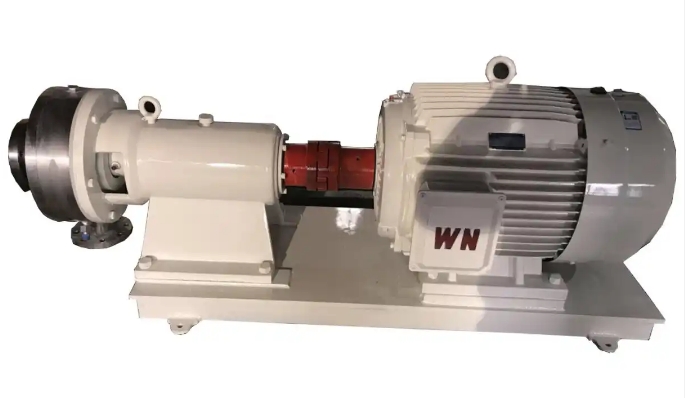
The emulsified modified asphalt equipment mentioned here includes hot water pumps and circulation pumps. This type of centrifugal water pump generally uses a pipeline centrifugal pump. There is a sewage outlet at the bottom of the pipeline centrifugal pump. Pay attention to the sewage outlet at the bottom of the emulsified modified asphalt equipment pump. The water in the water tank is released through the filter valve. Some emulsified modified asphalt equipment does not have a filter valve to save equipment costs, so it can only be emptied by loosening the flange bolts at the bottom. There are basically two methods of moisturizing emulsion pumps for emulsified modified asphalt equipment on the market, gear oil pumps or centrifugal water pumps. The gear oil pump can only drain the liquid in the pump through the connecting flange of the pipeline. The centrifugal water pump carries out sewage treatment through its own sewage outlet.
When used in the production of emulsified modified asphalt equipment, depending on the modified material technology, the latex pipeline can be connected in front of the colloid mill or behind the colloid mill, or there may be no latex pipeline and it must be made manually. Add the required amount of latex into the soap jar.