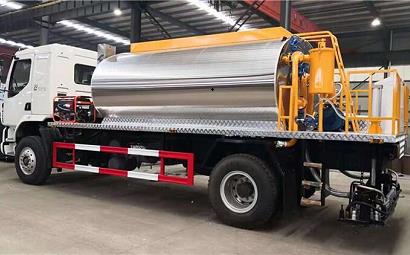
Slurry seal is the core technology of road preventive maintenance. Emulsion asphalt, aggregate, filler, water and additive are mixed synchronously by slurry seal truck and paved at one time. This process ** cannot directly use hot asphalt **, must use emulsified asphalt. According to JTG/T 5501 Technical Specification for Preventive Maintenance of Highway Asphalt Pavement, slow-cracking emulsified asphalt is preferred for slurry seal and micro-surface, and different types of emulsified asphalt have obvious differences in performance and application scenarios.

Slow Cracking Cationic Emulsified Asphalt (BC Series, Engineering Mainstream)
1. Common slow cracking cationic emulsion asphalt BC-1, BC-2 applicable scenarios: ordinary slurry seal ES-2, ES-3, ordinary national and provincial roads, urban road preventive maintenance.
Core Advantages 1. Slow cracking characteristics: slow demulsification speed, sufficient mixing time in the slurry sealing truck mixing tank, no premature demulsification and agglomeration, to ensure the uniformity of the mixture.
2. Excellent adhesion performance: cationic asphalt particles positively charged, can be closely adsorbed with neutral, alkaline stone, good water stability, rain erosion resistance.
3. Convenient construction: normal temperature construction, no need for on-site heating, reduce energy consumption, reduce smoke pollution, suitable for large-area rapid maintenance.
4. Storage stability: qualified products are not easy to layer when standing, convenient for on-site storage, suitable for on-site batch construction.
Limitations: wear resistance, low temperature cracking resistance is general, not suitable for heavy traffic trunk roads.
2. Modified slow cracking cationic emulsion asphalt BCR-1, BCR-2 applicable scenarios: micro-surface MS-2, MS-3, highway, heavy duty trunk road slurry seal, ultra-thin wearing layer. SBR latex modification is generally used.
core advantages
1. The slow-cracking mixing characteristics are retained, and the ductility and toughness of evaporation residues are greatly improved, and the anti-cracking ability is significantly enhanced.
2. Wear resistance, wheel push resistance, heavy traffic is not easy to appear particle loss, wear disease.
3. High temperature stability is better, summer road surface is not easy to flood oil.
4. The adhesive strength with stone is higher, and the water damage resistance is better than that of ordinary BC emulsified asphalt.
Limitations: higher cost of raw materials, production of asphalt emulsification equipment shear, measurement accuracy requirements are strict.
The slow cracking anionic emulsified asphalt BA-1, BA-2
Application scenario: only used in alkaline stone area, rarely used in domestic projects. Core advantages: simple production formula, low cost of raw materials, and good adhesion with alkaline stones. Limitations 1. Asphalt particles negatively charged, and acid stone adhesion is poor, easy to peel off in the presence of water, water stability is weak. 2. The selectivity of stone is too strong, most of the domestic stone for acid, limit the wide range of promotion. 3. and that integral durability of the for asphalt is not as good as that of the cationic emulsified asphalt.
Types and reasons of asphalt forbidden to be selected
1. Fast cracking and medium cracking emulsified asphalt: Demulsification speed is too fast. Demulsification will occur during mixing stage in mixing tank of slurry sealing truck, resulting in agglomeration and tank blocking. The pavement will be loose after paving.
2. Hot matrix asphalt: it needs high temperature heating, and cannot be evenly mixed with stone in the normal temperature mixing system of slurry sealing truck, so it cannot realize the integral paving of slurry sealing layer.

Key indicators of type selection (slurry seal layer shall be paid special attention to)
When selecting emulsified asphalt, in addition to ion type and demulsification grade, the following indicators need to be verified:
1. Demulsification speed: must be slow cracking;
2. Screen surplus: reflect the grinding effect of emulsion equipment, too large particles are easy to cause road bumps;
3. Evaporation residue content and ductility (emphasis on modified emulsified asphalt);
4. Storage stability (1d, 5d);
5. Adhesion between asphalt and mineral aggregate shall be ≥ Grade 4.
Summary
BC series of slow cracking cationic emulsified asphalt is preferred for slurry seal; BCR series of modified slow cracking cationic emulsified asphalt is recommended for heavy duty road and micro-surface engineering; anionic slow cracking emulsified asphalt is only considered under specific stone conditions.
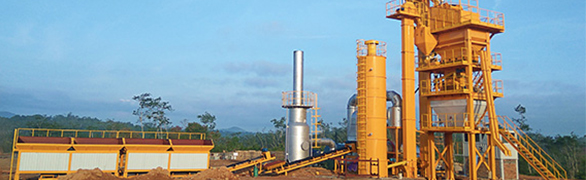
The quality of emulsified asphalt depends on the performance of asphalt raw materials and asphalt emulsifying equipment (colloid mill). Equipment measurement accuracy, shear fineness, temperature stability directly affect the emulsion quality, and ultimately determine the slurry seal paving quality and pavement service life.



.jpg)