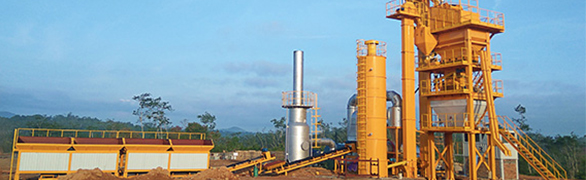
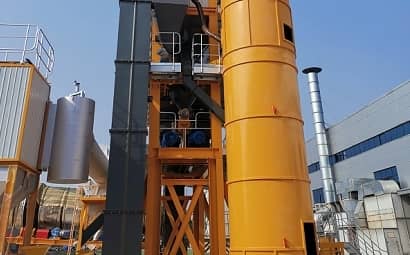
Slurry seal is the most economical and efficient core process for highway preventive maintenance, and emulsified asphalt is the core bonding substrate of slurry seal mixture, which also determines the molding quality, road performance and service life of slurry seal. Key material.Different from traditional hot asphalt, emulsified asphalt can realize normal temperature mixing and paving, and perfectly adapt to the construction mode of slurry sealing truck integrated mixing, paving and molding.Combined with JTG/T 5501-2022 Technical Specification for Preventive Maintenance of Highway Asphalt Pavement, this paper comprehensively analyzes the core use, action principle, subdivision function and construction application points of emulsified asphalt in slurry seal.
Core function principle: adapt slurry seal normal temperature construction system
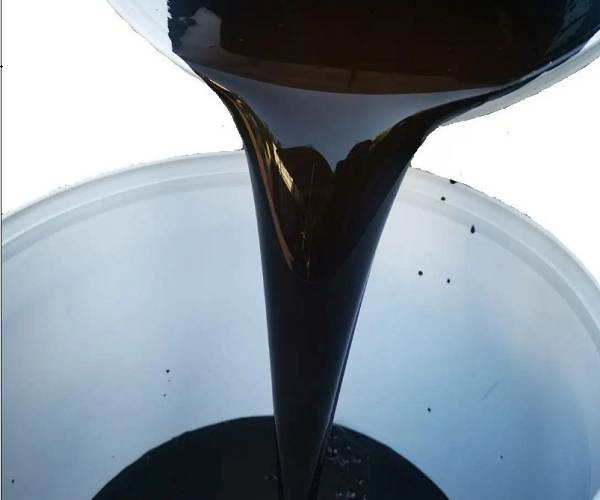
The construction logic of slurry seal layer is different from hot mix asphalt mixture. It does not need to heat aggregate and asphalt at high temperature. It realizes construction and molding depending on the special physical state of emulsified asphalt.Emulsified asphalt is a normal temperature liquid emulsion formed by thinning asphalt into micron-sized particles by high speed shearing and uniformly dispersing in aqueous solution containing emulsifier. It has two core characteristics and accurately matches the construction requirements of slurry seal layer:
First, room temperature liquid mixability.Excellent fluidity at normal temperature, can be mixed with dry stone, mineral powder, water and additives quickly and evenly in the mixing tank of slurry sealing truck to form homogeneous paste slurry mixture, solving the pain point that hot asphalt cannot be mixed at normal temperature and high energy consumption is high in high temperature construction.
Second, controllable demulsification formability.Special slow-cracking emulsified asphalt can control the demulsification speed, ensure that the mixture does not solidify in advance during the whole process of mixing, transportation and paving, and gradually demulsify with moisture evaporation and ion adsorption after paving, and aggregate asphalt particles to solidify, firmly bonding loose aggregates into the overall pavement structure.
Five core uses of emulsified asphalt in slurry seal
Aggregate bonding molding to build an integral wear-resistant seal
This is the most basic and core use of emulsified asphalt.The crushed stone and crushed stone aggregate used in slurry seal layer are loose particles without cohesion and cannot form stable pavement.After emulsified asphalt is spread and solidified, continuous and dense asphalt film will be formed on the surface of aggregate, filling the gap between aggregates, and bonding scattered mineral aggregate particles into thin pavement structure with high strength and strong integrity.
The formed slurry seal pavement has good integrity, which can effectively disperse vehicle load, avoid loose aggregate, falling off and particle falling, fundamentally solve the problems of aggregate peeling, pockmarks and pits on the surface layer of the old pavement, and greatly improve the overall integrity of the pavement.
Seal pavement pores to achieve waterproof and waterproof protection
After long-term service of the original asphalt pavement, a large number of fine cracks and capillary pores will occur in the surface layer, and rainwater will easily penetrate into the interior of the pavement structure through pores, scour the base layer, soften the subgrade, and then cause deep pavement diseases such as net crack, subsidence, frost boiling, etc.
The particles of emulsified asphalt after refinement are extremely small, which can fully penetrate and fill fine cracks and pores of pavement. After the mixture is paved and solidified, a dense waterproof sealing layer will be formed to effectively block the infiltration of rainwater and surface water.At the same time, it can block the upward transpiration of groundwater to erode the pavement base layer, protect the pavement structure layer in all directions, and prolong the overall service life of the road, which is also the preventive maintenance value of the core of the slurry seal layer.
Fill in micro-defects and optimize road flatness
Most of the roads requiring slurry seal maintenance have some problems such as slight unevenness, fine rutting, shallow cracks and uneven wear of pavement. Slurry seal mixture has good fluidity and workability, the core rely on emulsified asphalt lubrication, filling performance.
In the paving process, emulsified asphalt can drive fine aggregate to fully fill the fine depression, crack and wear area of the pavement, unify the pavement elevation, repair the superficial disease of the pavement, and effectively improve the smoothness of the pavement. At the same time, optimize the road driving texture, reduce vehicle bumps and noise, and improve road traffic comfort.
.jpg)
Improve road anti-skid performance and restore road capacity
After the road is opened to traffic for a long time, the surface asphalt will gradually wear and flood, resulting in the decrease of friction coefficient of the road surface, and it is easy to have potential safety hazards such as slipping and braking distance lengthening in rainy days. The slurry mixture prepared by emulsified asphalt has fine grained structure, and the pavement texture is fine and rough after molding, which can effectively restore the macroscopic structure depth of pavement.
Compared with the original old smooth pavement, the anti-skid performance of slurry sealing pavement is significantly improved, the driving safety in rainy days is greatly optimized, and it is perfectly suitable for various traffic scenarios such as urban roads, national and provincial roads, park roads, etc.
Bonding new and old pavement layers to strengthen interlayer adhesion
In the course of local repair and sectional maintenance, the problems of delamination, void and crack are easy to occur at the joint of new and old pavement. Emulsified asphalt has both bonding and permeability properties. After paving, it can be closely adsorbed and combined with the surface of the original old pavement, and at the same time firmly bond the newly paved mixture to realize the seamless connection between the old and new pavements.
Effectively avoid common construction diseases such as interlayer separation, peeling and cracking, ensure the continuity and stability of pavement structure, and improve the overall quality of maintenance construction.
Different types of emulsified asphalt differentiated use adaptation
It is strictly prohibited to use fast-cracking and medium-cracking emulsified asphalt for slurry sealing layer. It is only suitable for slow-cracking emulsified asphalt. Different types of application scenarios are accurately distinguished to meet different maintenance requirements:
Common slow cracking cationic emulsified asphalt (BC-1, BC-2)
Suitable for regular light and medium traffic roads, used for ordinary ES-2, ES-3 slurry sealing layer, suitable for daily preventive maintenance of urban branch roads, county roads and park roads. The core uses are waterproof sealing, surface disease repair, pavement flatness optimization, high cost performance, and can meet the basic road use requirements of conventional road maintenance.
Modified slow-cracking cationic emulsified asphalt (BCR-1, BCR-2)
After SBR latex modification treatment, toughness, wear resistance, water resistance, low temperature cracking resistance greatly improved, suitable for heavy traffic scenes, mainly used for micro-surface (MS-2, MS-3) of expressways, national and provincial trunk lines and high strength slurry sealing layer construction. In addition to the bonding, waterproof and filling functions of the foundation, it can significantly improve the rutting resistance, wear resistance and water damage resistance of the pavement, and adapt to the traffic demand of large flow and heavy load.
Slow cracking anionic emulsified asphalt (BA series)
Only suitable for small construction scenarios in alkaline stone areas, there are very few domestic applications. The overall bond strength and water stability are weaker than cationic emulsified asphalt, and it is not recommended to use without special site conditions.
Key Logic of Emulsified Asphalt Deciding Construction Quality of Slurry Seal
Demulsification speed determines construction feasibility
The demulsification speed of high-quality slow-cracking emulsified asphalt can be controlled, which can ensure the stability of the whole process of mixing, short-distance transportation and uniform spreading of the mixture in the slurry sealing tank, without the problems of premature demulsification, caking and tank blocking, and ensure the continuity of construction. If the emulsified asphalt quality is not up to standard and the emulsion breaking is too fast, it will directly lead to construction failure, loose pavement, peeling, potholes and other diseases.
Particle fineness determines molding density
The emulsified asphalt sheared by high-quality asphalt emulsification equipment has fine and uniform particles, which can fully wrap each aggregate and fill the fine gaps between the aggregates. After molding, the pavement has high compactness, low porosity, and excellent waterproof, wear-resistant and anti-aging properties. If the asphalt particles are coarse, it will lead to uneven mixing of the mixture, and problems such as lumps, segregation and water seepage will occur on the road surface.
Storage stability determines construction consistency
Emulsified asphalt with good stability can be stored for a long time without layering and precipitation, which can ensure the consistency of mixture ratio and performance in batch construction process, avoid uneven pavement quality before and after construction, and realize large-area standardized maintenance construction.

Key precautions for construction application
1. Temperature control: special emulsified asphalt for slurry sealing layer is normal temperature emulsion, storage and construction temperature shall be controlled at 5℃~40℃, heating and high temperature storage are prohibited, otherwise it will break emulsion in advance; heat preservation and sun protection shall be done in winter and summer exposure.
2. Strict matching of demulsification grade: slow-cracking emulsified asphalt shall be selected in the whole process to eliminate fast-cracking and medium-cracking products and prevent mixture from solidifying in advance, causing construction failure and pavement quality defects.
3. Strictly control material proportion: accurately control the content of emulsified asphalt according to the degree of pavement disease and aggregate grading. Too low content will lead to insufficient bonding and loose pavement; too high content is easy to cause oil flooding, slipping, soft pavement and other problems.
4. Control the molding opening time: according to the demulsification and solidification law of emulsified asphalt, open the traffic after the road surface is completely dry and molded firmly, so as to avoid road wear, deformation and particle loss caused by premature opening to traffic.
SUMMARY
Emulsified asphalt is the bonding core, waterproof core and molding core of slurry sealing process, and is not a simple auxiliary material. Its core uses can be summarized as follows: bonding loose aggregate, sealing pavement seepage, filling superficial diseases, restoring anti-skid performance, strengthening interlayer bonding. Relying on the advantages of normal temperature construction, controllable demulsification and stable performance, the slurry sealing process has the characteristics of low cost, high efficiency, no pollution and good maintenance effect.