Asphalt pavement has become the mainstream pavement form of urban municipal roads, expressways and rural trunk roads by virtue of its advantages of high flatness, comfortable driving, low noise, convenient maintenance and fast opening speed.Asphalt road construction is a systematic and refined project, covering many core links such as preliminary preparation, subgrade treatment, base construction, asphalt pavement paving, rolling molding and later maintenance. The construction quality of each step directly determines the service life and traffic safety of the road.This paper will disassemble the whole process steps of standardized asphalt road construction in detail.

preliminary construction preparation
The preliminary preparation is the basis for ensuring the smooth development of construction and avoiding potential quality hazards, mainly including three major preparations: technology, site and materials and equipment.
In terms of technical preparation, the construction team shall deeply study the construction drawings, design specifications and geological survey report, and prepare special construction scheme and safety technical disclosure documents in combination with road grade, traffic load and local climatic conditions.At the same time, technical training and safety training shall be provided for all construction personnel, construction standards, operation specifications and risk prevention and control points of each post shall be clarified, key parameters such as road axis, elevation and slope shall be reviewed in advance, and survey and setting out datum shall be done well.
In terms of site preparation, first clean up weeds, roots, construction waste, silt and other sundries in the construction area, and level the construction site.Secondly, temporary construction access roads, enclosures and drainage facilities shall be set up, material stacking area, equipment parking area and construction operation area shall be divided, site traffic diversion and safety warning arrangement shall be well arranged to ensure that construction and surrounding traffic do not interfere with each other.In addition, it is necessary to check the position of underground pipelines and structures in the construction area and mark them for protection to avoid damage caused by construction.
In terms of material and equipment preparation, raw materials such as asphalt, crushed stone, mechanical sand and mineral powder shall be strictly screened, and all materials shall be submitted for inspection to ensure that penetration, softening point, particle size gradation and other indicators meet design standards.At the same time, commissioning asphalt mixing station, paver, roller, sprinkler, grader and other complete sets of construction equipment to ensure stable performance of equipment, equipment repair and maintenance work in advance.
Subgrade construction and treatment
Subgrade is the load-bearing foundation of road. The stability and compactness of subgrade directly determine whether asphalt pavement will appear settlement, cracking, pit and other diseases, which is the core foundation link of construction.
Firstly, subgrade excavation and filling shall be carried out. According to the design elevation, road trench shall be excavated, and road trench slope and arch shall be trimmed to ensure that the transverse and longitudinal slope of subgrade meets the drainage design requirements. For low-lying areas, qualified plain soil and lime soil shall be used for layered filling, and the filling thickness of each layer shall be strictly controlled within the specification range to eliminate the problem of substandard compaction caused by thick layer filling.
Secondly, compaction shall be carried out layer by layer. Heavy roller shall be used to roll the filled subgrade layer by layer. The compaction shall follow the principle of "light first, then heavy, slow first, then fast, edge first, then middle, low first, then high", and the weak areas such as subgrade edge and corner shall be compacted emphatically. After completion of compaction, inspect the subgrade compaction, flatness, elevation, width and other indicators to ensure that the compaction and deflection values meet the design specifications.
Finally, subgrade trimming and acceptance shall be carried out, uneven areas on subgrade surface shall be leveled and trimmed, loose soil shall be cleaned, subgrade drainage system shall be improved, and settlement caused by soaking subgrade in accumulated water shall be avoided. After all indicators are qualified, the next construction procedure can be entered.
base construction
The base layer is located between the subgrade and the asphalt surface layer. Its main function is to transmit and disperse the road load and improve the overall bearing capacity and stability of the road. The commonly used material is water-stabilized macadam (cement stabilized macadam), which is the main load-bearing structural layer of asphalt pavement.
Before base construction, the subgrade surface shall be cleaned again to ensure no sundries and ponding. According to the design mix ratio, the water-stabilized mixture shall be mixed intensively through the mixing station, and the cement dosage, water content and stone grading shall be strictly controlled to ensure the uniform mixture ratio. The mixture shall be transported by closed transport vehicle to prevent segregation and scattering, and the transportation time shall be strictly controlled to avoid initial setting failure of mixture.
After the mixture is transported to the site, it shall be paved at a uniform speed by grader, and the paving thickness, flatness and road arch slope shall be accurately controlled. After paving is completed, compaction shall be carried out in time. Static compaction shall be carried out first and vibration compaction shall be carried out later. Compaction shall be completed quickly to avoid initial setting of cement affecting compaction effect. After rolling, cover geotextile or moisture cotton immediately for watering curing. The curing period is usually not less than 7 days. During the curing period, vehicles are prohibited to pass through and rolling collision is prohibited.
After curing, the compaction, thickness, flatness and strength of the base shall be comprehensively tested, and the cracks, looseness and potholes on the surface of the base shall be repaired to ensure that the overall quality of the base reaches the standard and provide a smooth and solid foundation for the construction of asphalt pavement.
Prime and sticky layer construction
Permeable layer and adhesive layer are the key adhesive layers connecting base course, asphalt surface course and asphalt structural layers, which can effectively improve the integrity of pavement and prevent interlayer shedding and water seepage.
Prime coat construction shall be carried out after the base course maintenance reaches the standard, and its main function is to penetrate and solidify the base course surface, bond the base course and asphalt surface course. During construction, the emulsified asphalt shall be sprayed evenly by spraying truck, and the spraying amount shall be strictly controlled to ensure uniform penetration, no accumulation and no leakage. After spraying, the emulsified asphalt shall be allowed to stand and penetrate. The next construction shall be carried out only after asphalt emulsion breaking and water evaporation.
The adhesive layer is mainly used for bonding between the upper and lower layers of asphalt pavement, and is carried out after the completion of the construction of the lower asphalt pavement and cooling and cleaning. In the same way, the emulsified asphalt shall be evenly sprayed, and the detailed areas such as joints, corners and inspection wells shall be mainly treated to ensure close adhesion between layers and eliminate the problem of delamination and hollowing.
Asphalt mixture paving construction
Asphalt surface layer is divided into lower layer, middle layer and upper layer. The three-layer structure progresses layer by layer to form a smooth and wear-resistant pavement surface layer. Paving quality directly affects pavement flatness and driving experience.
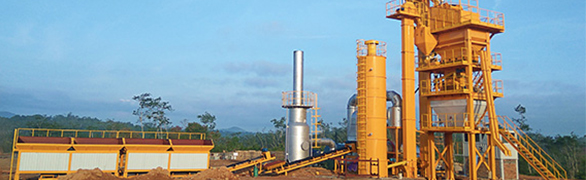
Asphalt mixture shall be mixed at high temperature in professional mixing station, and mixing temperature and mixing time shall be strictly controlled to ensure uniform adhesion between asphalt and stone without white material and caking. The mixture shall be transported by heat preservation truck, which shall be covered with heat preservation in the whole process to ensure that the temperature transported to the construction site meets the paving standard, so as to avoid the mixture compaction difficulty and poor cohesiveness caused by too low temperature.
Before paving, clean the working surface again to ensure that there is no dust, sundries and accumulated water. Automatic asphalt paver shall be adopted for uniform and continuous paving. The paving speed and thickness shall be set according to the road grade, so as to eliminate pause and random speed change and reduce construction joints. Real-time monitoring of paving thickness, flatness and arch slope during paving process, timely fine adjustment and correction to ensure uniform and smooth paving surface.
For road intersections, manhole covers and corner areas that cannot be covered by pavers, manual fine paving and leveling shall be adopted to fill the blind areas of mechanical construction and ensure the unity of overall paving quality.

laminated rolling molding
Rolling is the key process of asphalt pavement molding, which directly determines the compactness, flatness and durability of pavement. It is necessary to operate in layers according to the three steps of "initial compression, recompression and final compression", and control the temperature and rolling technology in the whole process.
Light steel wheel roller is used for initial compaction, which is used for rapid compaction under high temperature condition of asphalt mixture. Its main function is to stabilize mixture, preliminarily shape, eliminate paving marks, and the rolling speed is slow and uniform to avoid moving pavement mixture.
Recompaction is the core link of compaction molding. Heavy vibratory roller or rubber wheel roller shall be adopted to fully compact the mixture through high-frequency and low-amplitude vibratory compaction, greatly improve the compactness of pavement, eliminate internal voids and prevent water seepage and loose diseases in later period. Re-compaction shall be repeated several times until the compactness reaches the standard.
Steel wheel static roller is adopted for final compaction, which is mainly used to eliminate rolling wheel marks, trim road flatness, make the whole road smooth and regular, and complete the final shaping of road surface. The final compaction shall be completed before the temperature of asphalt mixture drops to the lower limit of specification to ensure the compaction effect.
Overpressure and pressure leakage shall be avoided during the whole rolling process, rolling temperature, speed and times shall be strictly controlled, key parts such as construction joints, bridgeheads and ramps shall be mainly treated to ensure uniform rolling quality of the whole section.
Joint treatment and defect repair
Asphalt pavement construction can not avoid horizontal and longitudinal construction joints, joint treatment quality is the key to prevent pavement cracking, seepage, jumping.
The longitudinal joints shall adopt hot joint technology, and two pavers shall pave synchronously in echelon, roll and splice when hot, so as to ensure that the joints are tightly bonded and seamless. Horizontal joints shall be treated as flat joints. After completion of construction, cut and level the joint section. Apply adhesive asphalt before next paving. After overlapping paving, focus on rolling and leveling to eliminate joint height difference.
After the pavement is formed, the defects such as fine cracks, pits, segregation and color difference on the surface shall be checked in time, the local defects shall be finely repaired, and the pavement shall be polished and leveled to ensure the overall aesthetics and integrity of the pavement.
Post-curing and completion acceptance
After the asphalt pavement is rolled and formed, it enters the maintenance stage. It is necessary to close the traffic for natural cooling maintenance. Vehicles and pedestrians are strictly prohibited to pass through, so as to avoid deformation and wear of the pavement under pressure. Traffic can only be opened after the temperature of the road surface has completely dropped to normal temperature.
After the maintenance is completed, the construction team shall jointly supervise and the construction unit shall carry out comprehensive completion acceptance, focusing on the inspection of core indicators such as pavement flatness, compaction, thickness, friction coefficient, structural depth, transverse slope, elevation, etc., and inspect that the pavement is free of cracks, pits, looseness, water seepage and other quality defects. After all indexes meet the design and specification requirements, the project acceptance shall be completed and formally delivered for use.
Conclusion Asphalt road construction is a set of refined and standardized systematic engineering. From preliminary preparation, subgrade and base construction, to asphalt paving, rolling and forming, and post-maintenance, every step is closely linked and restricted layer by layer. Only by strictly following the construction specifications and controlling the quality details of each process can we create a high-quality asphalt road with high flatness, strong durability and safe traffic, effectively reduce the later maintenance cost and prolong the service life of the road.