Interval Time and Key Points of Asphalt Spreading after Slurry Seal Construction
In highway maintenance and new pavement construction, slurry seal as a high quality waterproof, adhesive, wear-resistant transition layer, often with asphalt pavement construction.Asphalt shall not be spread immediately after slurry sealing construction, and sufficient curing and molding time shall be reserved, otherwise pavement diseases such as interlayer bonding failure, peeling, displacement and water seepage damage will occur.Combined with Technical Specification for Preventive Maintenance of Highway Asphalt Pavement (JTG/T 5142-01-2021) and site construction standards, the reasonable interval time, judgment standard and construction control points of asphalt paving after slurry sealing are described in detail below.
Standard paving interval time
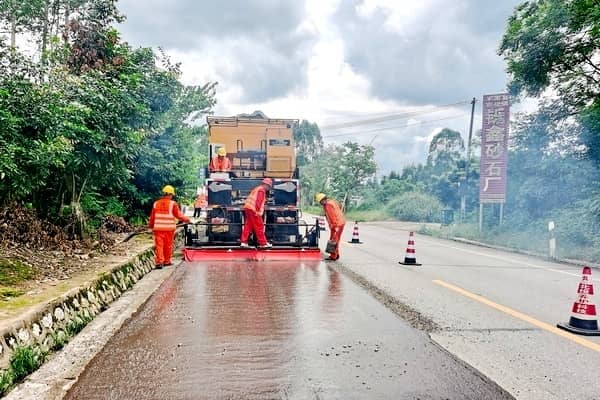
Slurry sealing layer takes emulsified asphalt as binder, and the core of molding is emulsion breaking, moisture evaporation and strength curing. The interval time of paving asphalt shall strictly match its molding progress, which is divided into three standards: emergency construction, conventional construction and optimal construction:
1. Minimum emergency interval: 2 hours.Under normal temperature and suitable working conditions (temperature 20℃~25℃, dry and windless), the slurry seal shall be cured for at least 2 hours after completion of paving, and asphalt paving operation can be carried out after the mixture is preliminarily demulsified, free of free moisture on the surface and free of wheel adhesion. It is only applicable to emergency construction scenarios with tight construction period.
2. Regular standard interval: 24 hours.This is the general standard for municipal roads and ordinary highway construction.After 24 hours of natural curing, the slurry seal layer basically completes emulsion breaking and solidification, forming a stable overall structure, the interlayer bonding performance and waterproof performance meet the basic requirements of construction, and the asphalt surface layer can be paved normally, which is suitable for most conventional construction conditions.
3. The optimal molding interval: 48 hours.If construction conditions permit, it is recommended to reserve 48 hours of curing time.At this time, the water in the slurry seal layer completely evaporates, the bond strength and structural stability meet the design standards, and the combination effect with the subsequent asphalt surface layer is the best. It can completely avoid interlayer voids and slip diseases, and greatly improve the overall durability of the pavement. It is the preferred construction interval for high-grade highways and heavy-duty roads.
Core factors affecting interval time
The curing speed of slurry seal is greatly affected by environment, materials and technology. The actual paving interval shall be dynamically adjusted according to site conditions. Fixed time shall not be mechanically applied:
Ambient Temperature and Humidity Temperature
It is the key to determine the speed of emulsion breaking and solidification.When the temperature is higher than 25℃, the air is dry and the ventilation is good, the moisture evaporates quickly and can be completely formed in 24 hours; when the temperature is lower than 15℃ or in rainy and humid weather, the curing speed slows down greatly, and the curing time needs to be extended to 48~72 hours; when the temperature is lower than 5℃, it is strictly prohibited to construct slurry seal layer. Under low temperature, the mixture cannot be broken and formed normally, and the subsequent paving asphalt is easy to be damaged as a whole.
Construction thickness and material ratio
The thickness of conventional slurry seal is 3~8 mm. The greater the thickness, the slower the evaporation of internal water, and the longer the curing time required. The emulsion breaking speed is different with different amounts of emulsified asphalt and additives in the mixture. The slurry seal mixed with special fast-setting additives can shorten the interval appropriately. The ordinary proportion needs to be cured strictly according to the standard time.
Weather and ventilation conditions
The curing efficiency is the highest in sunny and light wind environment; in rainy, foggy and damp weather, the subsequent construction shall be suspended, and the asphalt shall be spread after the surface of the sealing layer is completely dry and free of accumulated water and moisture; in windy weather, the surface drying can be accelerated, but dust protection shall be taken to avoid dust adhesion affecting the interlayer bonding quality.
Practical operation criteria for pavable asphalt
Compared with the fixed time, the field molding state is the core basis for judging whether asphalt can be paved. Asphalt paving can be carried out if all the following conditions are met:
1. Complete demulsification molding: the surface color of the sealing layer is uniform, from the black and bright wet state at the initial stage of construction to the matte and dry state, without white, oil and local moisture, conforming to the preliminary molding standard of the specification.
2. No sticky wheel, no falling particles: rolling with tires or manual treading test, the surface does not stick to tires, does not stick to soles, aggregates do not fall off, loose phenomenon, stable surface structure.
3. No free moisture: no accumulated water and moisture inside and on the surface of the sealing layer, dry by hand, no sticky feeling of moisture, prevent moisture residue from causing peeling and bulging between layers in the later stage.
Construction taboos and quality control points
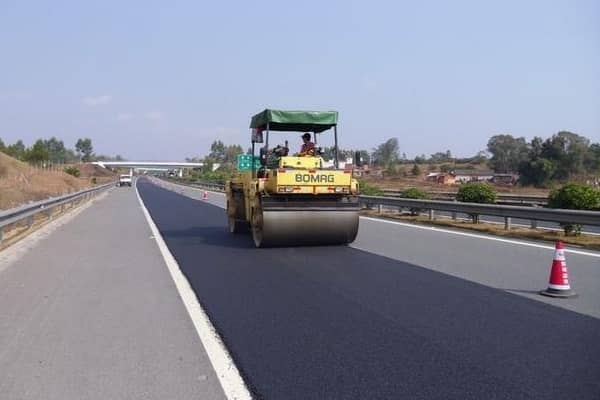
1. Unformed paving is prohibited: paving asphalt is absolutely prohibited before slurry seal is demulsified and dried.High temperature asphalt mixture will envelop residual moisture in the sealing layer, which will cause bulging, cracking and interlayer peeling of pavement after thermal expansion, and seriously damage the pavement structure.
2. Finished product protection during curing period: traffic shall be closed during the whole curing period, and vehicles and pedestrians shall be prohibited from passing through to avoid crushing damage and pollution on the surface of the sealing layer; if sundries and dust are attached to the surface, the asphalt shall be cleaned thoroughly before paving to ensure the cleanliness between layers.
3. Special control in low temperature rainy season: in low temperature and rainy weather, the maintenance time shall be extended first, and the construction period shall not be rushed; in case of sudden rainfall after construction, the sealing layer state shall be checked in time, and the parts damaged by rainwater shall be removed and the slurry sealing layer shall be re-paved, and the asphalt surface layer shall be constructed after the maintenance meets the standard.
4. Special requirements for double-layer sealing: if double-layer slurry sealing process is adopted, the first layer sealing shall be molded for more than 24 hours, and the second layer can be paved only after inspection and stability without damage. The asphalt surface construction shall be carried out after the maintenance of the second layer meets the standard.
Summary
Comprehensive specification requirements and engineering practice, under normal temperature and normal conditions, asphalt can be paved 24 hours after slurry seal construction, the optimal interval is 48 hours, and the shortest interval shall not be less than 2 hours. On-site construction does not need to follow the rigid time limit, but needs to take "complete emulsion breaking, drying and non-sticking wheels, structural stability" as the core judgment standard, and dynamically adjust the curing time in combination with temperature, humidity and weather. Strict control of interval period and molding quality is the key to ensure close adhesion between slurry seal and asphalt surface, waterproof durability and prolong pavement service life.