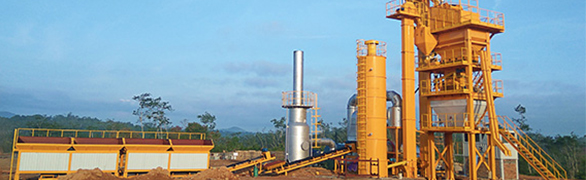
As an archipelagic nation with a vast, fragmented territory, Indonesia is witnessing the continuous expansion of its road networks—including highways, toll roads, and rural roads—alongside a growing annual demand for the maintenance of existing pavement. Due to geographical constraints, the inter-island transport of bulk bitumen via tanker trucks entails high costs and complex logistics; consequently, drummed bitumen has become the primary form of supply for remote regions such as Sumatra, Kalimantan, Sulawesi, and Papua. Bitumen decanting equipment—designed for heating, melting, extracting, storing, and transferring bitumen from drums—serves as a critical link between drummed bitumen supplies and asphalt mixing plants or road-spraying machinery. It has become an essential piece of equipment for many small-to-medium-sized construction contractors and bitumen suppliers across Indonesia. With the steady implementation of infrastructure investments in the country, the market demand for bitumen decanting equipment continues to grow, making it a key product among Chinese road construction machinery exports to Southeast Asia.
Underlying Reasons for Market Demand in Indonesia
Archipelago Geography Drives Widespread Use of Drummed Bitumen
Indonesia consists of thousands of islands. While Java boasts well-developed infrastructure—allowing large-scale projects to utilize bulk bitumen transported by ship—other islands face logistical challenges and a lack of large-scale bulk storage facilities. In these regions, drummed bitumen (typically in 155kg steel drums) is the most viable supply solution, as it facilitates containerized sea transport, inland transshipment, and on-site storage. Whether for the construction of new national, provincial, or regency roads, or for preventive maintenance and pothole repairs, bitumen is frequently delivered to construction sites in steel drums. The traditional, labor-intensive methods—manually opening drums and heating them over open flames—are inefficient and pose significant safety risks, creating a pressing, fundamental demand for automated bitumen de-drumming equipment.
National Infrastructure Planning Fuels Overall Bitumen Demand
Indonesia’s Ministry of Public Works continues to advance the upgrading of the national road network, the development of inter-island expressways, and projects to improve connectivity in rural areas. Simultaneously, the aging of existing road networks has led to a steady increase in the volume of preventive maintenance work. With an annual demand for bitumen exceeding 10 million tons—most of which is imported—even the bitumen supplied domestically by Pertamina is largely distributed in drums. Given the high number of contractors, the prevalence of small-to-medium-sized and geographically dispersed projects, and the wide variation in project scale, there is robust demand for small-to-medium, containerized de-drumming units (e.g., 6t/h or 10t/h capacity). Furthermore, Indonesia’s policy promoting the use of Buton rock bitumen (Asbuton) and the increasing adoption of modified bitumen necessitate greater precision in temperature control during the de-drumming process, further driving the need for equipment upgrades and modernization. 3. Significant Drawbacks of Traditional Manual Drum-Decanting Methods
At construction sites lacking specialized drum-decanting equipment, workers often resort to rudimentary methods—such as heating drums over open flames or manually breaking them open to extract the contents. These practices present numerous disadvantages: uneven heating leads to asphalt aging; significant amounts of asphalt remain in the steel drums, resulting in high material loss; the use of open flames creates a fire hazard—a risk further amplified in high-temperature environments; and the process is labor-intensive with low output, failing to keep pace with the continuous production requirements of asphalt mixing plants. To improve construction efficiency, comply with project safety standards, and minimize asphalt waste, construction firms are increasingly phasing out these primitive heating methods in favor of standardized, professional asphalt drum-decanting equipment.
Market Demand Segments in Indonesia
New Highway and Toll Road Projects
For cross-island highways and provincial arterial road projects outside of Java, small-to-medium-sized asphalt mixing plants are deployed on-site. These are paired with containerized asphalt decanting (de-drumming) units, which melt drummed asphalt into a liquid state to provide a continuous supply for the production of hot-mix asphalt. Given the tight project schedules, the equipment must allow for rapid installation and be transportable as complete containerized units to accommodate the relocation of temporary construction sites.
Preventive Pavement Maintenance
Maintenance techniques—such as slurry sealing, micro-surfacing, application of tack coats, and fog sealing—require either emulsified or hot asphalt. Many small-to-medium-sized maintenance contractors process drummed base asphalt directly on-site. Decanting units serve as essential equipment for these operations, providing a steady supply of asphalt to emulsification plants and asphalt distributors. The maintenance market is characterized by long-term cycles and fragmented projects, leading to consistent demand for repeat equipment purchases.
Asphalt Trading and Distribution
Asphalt agents and storage companies across Indonesia procure imported drummed asphalt in bulk. They use decanting units to melt the asphalt before reselling it to nearby construction firms. These clients typically prefer continuous-operation decanting systems that integrate melting, thermal storage, and pumping capabilities, effectively functioning as both storage facilities and asphalt transit hubs.
Small-Scale Emergency Repairs and Rural Road Projects
For projects involving county or township roads, residential area roads, or emergency pothole repairs—which are typically small in scale and geographically dispersed—there is a preference for compact, mobile, and easy-to-operate decanting units. These units have a small footprint and can be easily relocated alongside the projects.
Key Selection Preferences for Bitumen Decanting Equipment in the Indonesian Market
Given Indonesia’s tropical, high-temperature, and high-humidity climate—characterized by frequent rainfall—customer preferences for equipment reflect specific local requirements:
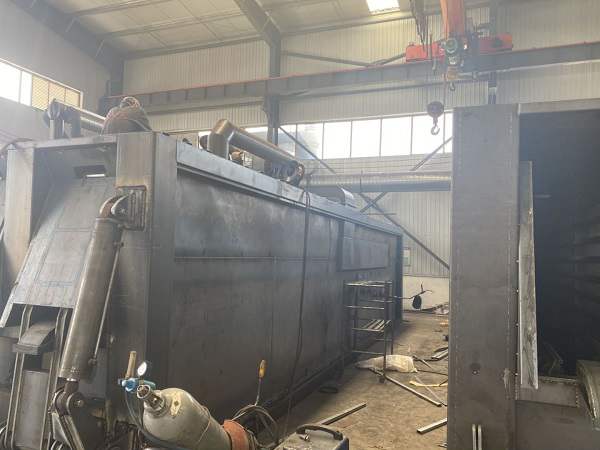
1. Containerized Modular Design: The entire unit is integrated into a standard shipping container, facilitating inter-island maritime transport. This design eliminates the need for complex on-site civil works, allowing for immediate operation upon arrival. Furthermore, the unit can be relocated in its entirety to subsequent project sites, making it the most popular configuration in the region.
2. Reliable Temperature Control and Overheating Prevention: In a tropical environment, precise temperature control is essential to prevent the thermal degradation (aging) of bitumen. Additionally, given the high humidity during the rainy season, electrical systems and heating circuits must be designed with robust moisture-proofing and anti-corrosion features.
3. Ease of Operation and Localized Maintenance: As local technical personnel may have limited English proficiency, equipment must feature intuitive, simple operating interfaces. Components should be readily available for procurement, and suppliers are expected to provide on-site installation, commissioning, and operator training.
4. Capacity Tiers: For small to medium-sized projects, 6 t/h and 10 t/h models are the standard choice; for large-scale bitumen storage and transshipment facilities, high-capacity continuous decanting systems are preferred.
5. Compatibility with Modified Bitumen: With the increasing use of modified bitumen for heavy-duty road construction, equipment must be capable of melting and transporting polymer-modified bitumen, effectively handling high-viscosity materials.
Market Outlook
In the medium to long term, road construction in Indonesia is shifting from a primary focus on large-scale new construction toward a balanced approach of both new construction and maintenance. This transition is driving steady growth in asphalt demand. Given the country’s geography, drummed asphalt will remain a vital supply method for remote islands, ensuring sustained growth potential for asphalt drum-decanting equipment. Market demand is evolving from basic decanting units toward integrated, all-in-one systems—customers now prefer containerized units that combine decanting, heating, thermal insulation, pumping, and storage. Furthermore, there is a growing demand for comprehensive production lines that incorporate asphalt emulsification and modification capabilities.
For Chinese equipment manufacturers, success in the Indonesian market hinges on several key factors: developing containerized units specifically designed for tropical climates, establishing a network of local distributors, and strengthening spare parts inventory and on-site training services. These measures are essential to address the unique operational challenges of the archipelago, such as the fragmented nature of projects and the frequent relocation of equipment. As more Chinese road construction machinery enters Indonesia, the market for asphalt drum-decanting equipment is set to benefit from the ongoing wave of infrastructure development across Southeast Asia.
Indonesia’s unique archipelagic geography makes drummed asphalt indispensable for projects on its outlying islands, creating a stable demand for drum-decanting equipment. This demand is underpinned by three main pillars: national highway infrastructure development, the maintenance of existing road networks, and the asphalt distribution and trading sector. Despite challenges related to inter-island logistics, regulatory certification, and after-sales support, Chinese-made asphalt drum-decanting equipment—leveraging mature technology and a strong price-to-performance ratio—enjoys significant market potential in Indonesia. It stands as a key product category for Chinese road construction machinery manufacturers expanding into the Southeast Asian market.