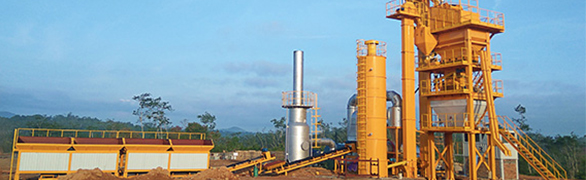
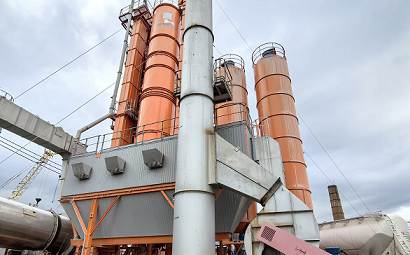
Practical operation scheme to ensure all-round pollution prevention of asphalt mixing plant
At the moment of green transformation of infrastructure industry and increasingly standardized environmental protection control, asphalt mixing plant, as the core supporting facility of road engineering, has become the core key to compliance operation and sustainable development of enterprises by controlling dust, asphalt waste gas, noise, wastewater and solid waste pollution in its production process. Asphalt mixing production covers many links such as raw material stacking, drying and screening, mixing and discharging, material transportation, etc. The pollution points are scattered and the treatment is difficult. Only by establishing a full-process, standardized and refined pollution prevention and control system and strictly observing environmental protection emission standards can we achieve a two-way win-win situation between production and operation and ecological protection and assist the green, low-carbon and high-quality development of the industry.

Dust pollution control: source control, blocking unorganized diffusion
Dust is the most important and frequent pollution type of asphalt mixing plant, mainly generated in the stacking, transportation, drying, screening, batching and vehicle access of sand and gravel raw materials, mainly unorganized emission, the core of governance is "source closure, process dust suppression, end dust removal" trinity control.
The raw material storage yard shall be fully enclosed, closed bins and enclosures shall be set up, and wind and dust suppression facilities shall be provided. All sand and gravel aggregates shall be stacked in a classified and closed manner, and idle materials shall be fully covered with dust net to completely eliminate the dust generation problem caused by open stacking. Semi-enclosed enclosure and micro-mist spraying dust suppression system shall be set at key dust emission points such as feed inlet, discharge outlet and batching hopper of bin, which shall spray water automatically according to production conditions to reduce dust, keep material surface moist and effectively inhibit dynamic dust diffusion. The factory floor is fully hardened, regularly cleaned, watered and cleaned to prevent dust from flying twice.
The production process needs to be equipped with efficient dust removal equipment, drying drum, vibrating screen, elevator and other equipment are all closed operation, the dust generated through the pipeline centralized collection, cyclone dust removal + bag dust removal combined process treatment, dust removal efficiency can reach more than 99%, treated clean waste gas through the standard height exhaust pipe discharge standards, fully meet the requirements of comprehensive emission standards for atmospheric pollutants. At the same time, the material conveyor belt is fully closed to prevent dust overflow during transportation.
Standardized vehicle washing platform, sedimentation tank and automatic washing equipment shall be set at the entrance and exit of the plant. All vehicles leaving the site must be washed clean and free of dust accumulation. The material transportation vehicles shall be covered with fully enclosed vehicle body + double-layer tarpaulin. The loading height shall be strictly controlled to prevent material scattering and dust leakage, so as to realize zero dust pollution in transportation links.
Asphalt waste gas treatment, odor control: precise treatment, strict control of harmful emissions
During asphalt heating, mixing, discharging and storage, harmful waste gases such as asphalt smoke, benzene series and irritating odor will be produced, which is the key and difficult point of environmental protection treatment of mixing station. This kind of waste gas has the characteristics of high temperature, complex composition and obvious odor, so it is necessary to adopt classification treatment process.
Firstly, the closed collection of equipment shall be implemented. All waste production points such as asphalt storage tank, mixing main building, discharge port and discharge port shall be equipped with closed gas collection devices to realize 100% centralized collection of waste gas, change from unorganized to organized, and prevent waste gas from scattering without organization. For waste gas under different working conditions, mature and efficient combination treatment process is adopted: after high temperature waste gas is collected by pipeline, it is cooled by water condensation and purified by multi-stage activated carbon adsorption. Some high-end working conditions can be combined with photo-oxygen catalysis and low-temperature plasma auxiliary treatment to completely decompose and adsorb asphalt smoke, peculiar smell and harmful pollutants.
A separate collection and treatment system shall be set up for the respiratory waste gas of asphalt storage tank to avoid direct exhaust of waste gas during the respiratory process of storage tank; clean fuel shall be selected for the combustion system of equipment to optimize combustion conditions and reduce exhaust pollution generated by fuel combustion. All the treated exhaust gas is uniformly discharged through the compliance height exhaust pipe, which stably meets the national and local environmental protection emission standards and completely solves the problem of peculiar smell disturbing the residents in the factory area and surrounding areas. At the same time, the activated carbon shall be replaced regularly and the condensation equipment shall be cleaned to ensure the long-term and efficient operation of the exhaust gas treatment system.
Noise pollution control: multi-measures to reduce noise, compliance production
The noise of asphalt mixing plant mainly comes from drying drum, induced draft fan, air compressor, vibrating screen, material conveying equipment and transportation vehicles. Long-term high-noise operation is easy to affect the plant area and surrounding environment. Systematic noise reduction treatment shall be carried out in strict accordance with the Emission Standard for Environmental Noise at Boundary of Industrial Enterprises (GB12348 -2008).
Priority is given to low-noise environment-friendly production equipment to reduce noise generation from the source. For high-noise core equipment such as induced draft fan, drying drum and vibrating screen, sound insulation cover, muffler and vibration damping base shall be installed accordingly, and sound insulation cotton and sound insulation plate shall be installed on the wall of mixing main building and equipment room. The operation noise of equipment shall be greatly reduced through triple measures of vibration damping, sound insulation and noise elimination.
Reasonably plan the layout of equipment in the plant area, and arrange high-noise equipment in the center of the plant area, far away from sensitive points such as residential areas and office areas. Noise insulation green plants are planted around the plant area to construct ecological noise reduction barriers to further reduce noise transmission and diffusion. At the same time, production operation hours are standardized, night control requirements are strictly implemented, high-noise production and transportation operations are stopped from 22:00 at night to 6:00 a.m. the next day, and transportation vehicles passing through surrounding residential areas are limited in speed and prohibited from sounding, so as to comprehensively ensure that the noise at the factory boundary reaches the standard.
Waste water pollution treatment: recycling, zero emission pollution
The production wastewater of mixing station mainly includes vehicle washing wastewater, site spraying wastewater, rainwater runoff and equipment cooling wastewater. The water contains sediment, suspended substances and other pollutants. It is strictly prohibited to discharge at will and centralized treatment and recycling shall be realized.
Standardized three-stage sedimentation tank and sewage collection tank shall be built in the plant area. All production wastewater and washing wastewater shall be collected and collected into the sedimentation tank. After sedimentation, filtration and purification, the water quality can fully meet the water standards for watering dust reduction, vehicle washing and site cleaning in the plant area, realizing closed loop circulation and zero discharge of wastewater.
Rainwater collection ditches and intercepting ditches are set up in the plant area to implement rainwater and sewage diversion. Rainwater is collected and deposited separately for reuse, so as to avoid pollution of surrounding water caused by rainwater washing the ground and carrying pollutants. Regularly clean the sludge in the sedimentation tank, maintain the water treatment equipment, ensure the stable operation of the wastewater treatment system, and eliminate the risk of water pollution from the source.
Comprehensive treatment of solid waste: classified disposal, resource utilization
The solid waste produced by asphalt mixing plant mainly includes dust collected by dust removal, waste sand and gravel, waste asphalt mixture, sludge from sedimentation tank and a small amount of waste activated carbon, etc., which shall be strictly stored by classification, standardized disposal and resource utilization.
The dust, waste sand and gravel, unqualified mixture and other general solid wastes generated by production shall be collected uniformly, stacked by classification, and all of them shall be recycled for production mixing, so as to realize the recycling of resources and reduce the loss of raw materials. After crushed and screened, waste asphalt mixture can be recycled and used in base pavement construction to improve resource utilization rate.
Hazardous solid wastes such as waste activated carbon shall be stored separately in a sealed manner, special hazardous waste storage areas shall be set up, standardized labels shall be posted, accounts shall be established, qualified professional institutions shall be entrusted regularly for compliance removal and disposal, and secondary pollution caused by random disposal and landfill shall be resolutely eliminated. Domestic waste in the plant area shall be collected separately and handed over to the sanitation department for unified treatment, so as to fully realize the reduction, harmless and resource disposal of solid waste.

Long-term management operation and maintenance: build up green production bottom line
Perfect governance facilities are the foundation, and normal operation and maintenance management is the key. Enterprises shall establish and improve environmental protection management system, clarify environmental protection responsibilities of each post, and incorporate pollution prevention and control work into daily production assessment. Regularly overhaul, maintain and replace consumables for dust removal equipment, waste gas treatment system, noise reduction equipment and water treatment facilities, ensure that all environmental protection equipment and production equipment operate synchronously and 100% are put into use, and prevent idle and faulty operation of equipment.
At the same time, strengthen environmental protection training for employees, standardize production operation procedures, and eliminate pollution problems caused by illegal operations; establish environmental protection accounts, record equipment operation and maintenance, pollutant discharge, solid waste disposal and other data in detail, actively meet the regulatory requirements of environmental protection departments, regularly carry out self-inspection and self-correction, and timely rectify environmental protection hidden dangers.
Epilogue
Green environmental protection is an inevitable trend for the high-quality development of the asphalt mixing industry, and it is also the core competitiveness of enterprises based on the market. Asphalt mixing plant pollution prevention is not a single link of rectification, but the whole process, standardization, normalization of the system engineering. From source closed control, process precise treatment to terminal compliance disposal, from hardware equipment upgrading to long-term operation and maintenance management, comprehensive treatment of waste gas, dust, noise, wastewater and solid waste can not only assist enterprises in compliance production, avoid environmental protection risks, but also establish green enterprise image, and promote road infrastructure industry to move forward steadily in the direction of low carbon, environmental protection and sustainability.