Technical points and practical operation methods of precise control of spraying quantity of asphalt distributor
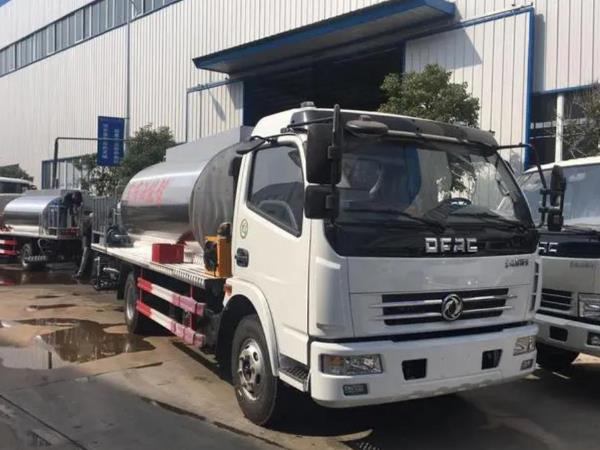
Asphalt distribution quantity is the core quality control index of road construction adhesive layer, permeable layer and sealing layer, which directly determines the adhesive strength, waterproof performance and service life of pavement.Too much spraying will easily cause road surface oil flooding, wrapping, sliding and other diseases, increase material loss and construction cost; too little spraying will lead to poor adhesion between layers, water seepage and void, causing road cracking and subsidence problems.The core of spraying quantity control of asphalt spraying vehicle is to realize constant asphalt spraying quality per unit area. Through system parameter matching, dynamic closed-loop adjustment and standardized practical operation calibration, the uneven spraying caused by vehicle speed, oil temperature and equipment working conditions can be avoided to ensure the pavement construction quality reaches the standard.This paper comprehensively explains the control principle, core mode, parameter adjustment and practical operation quality control points of asphalt distributor spraying quantity.

Core Principle of Spray Quantity Control
Modern intelligent asphalt distributor abandons the extensive mode of traditional manual experience estimation, adopts closed-loop control logic of area density, and the core control target is fixed asphalt spraying weight (kg/㎡) per square meter of road surface, rather than fixed asphalt flow rate.The core operation logic is as follows: operators preset basic parameters such as construction design spraying amount and spraying width; equipment collects data such as driving speed, asphalt flow rate, pipeline pressure and asphalt temperature in real time through high-precision sensors; vehicle-mounted controller compares preset parameters with real-time operation data, dynamically adjusts asphalt pump speed and nozzle opening, and corrects flow deviation in real time.
In short, when the speed of the construction is accelerated, the system automatically increases the flow rate of the asphalt pump; when the speed is slowed down, the output flow of the pump body is reduced synchronously, so as to ensure that the asphalt spraying amount per unit road area is uniform under any driving speed, completely solve the problem of uneven distribution thickness caused by the fluctuation of the speed of traditional equipment, and realize the standardized distribution operation of "uniform, equal and uniform".
Two core control modes of spraying quantity
At present, the asphalt distribution vehicles commonly used in the project are divided into two modes: automatic intelligent control and manual auxiliary control, which adapt to different construction scenarios and accurately cover the operation requirements of conventional construction and special conditions.
Fully automatic intelligent control mode
This mode is the main control mode of road construction at the present stage. It relies on vehicle-mounted intelligent control system, speed sensor, flow sensor and temperature sensor to form a closed-loop control system. Its automation, accuracy and stability far exceed manual mode. It is suitable for high-speed, municipal trunk road and other high-standard road construction.
During operation, the operator only needs to enter the core parameters on the touch panel of the cab or the rear operation screen: design spraying amount (kg/㎡), actual spraying width, asphalt medium type (hot asphalt, emulsified asphalt, etc.).The system will automatically calculate and match the reference asphalt pump speed and reference flow rate, collect the vehicle driving pulse signal and pipeline flow data in real time during the construction process, and dynamically adjust the pump speed and spray pressure in milliseconds.At the same time, the system can independently control the opening and closing of each group of nozzles, and accurately open and stop the corresponding nozzles according to the width of the road, so as to avoid the dosage deviation caused by ultra-wide spraying, partial leakage and overlapping spraying.
In addition, the intelligent system can monitor asphalt temperature in real time and automatically correct flow errors.The viscosity of asphalt fluctuates greatly with temperature. When the temperature is low, the asphalt is viscous, the fluidity is poor, and the flow rate is small at the same speed; when the temperature is high, the asphalt is thin and the flow rate is large.Through temperature feedback compensation parameters, the system offsets the dispersion deviation caused by oil temperature and further improves the control accuracy.
Manual auxiliary control mode
Manual mode is mainly used for special scenarios such as equipment sensor failure, small area repair, scattered corner construction, etc. It relies on manual matching of vehicle speed, pump speed and spray pressure to control the amount of spraying, which requires high experience for operators.
Before operation, it is necessary to determine the standard spraying amount corresponding to fixed pump speed and fixed gear through test spraying calibration in advance, and lock the opening number of nozzles and spraying pressure.During construction, operators shall keep constant speed driving, strictly match preset pump speed and vehicle speed, and try to avoid rapid acceleration, rapid deceleration, idle stop and other operations.This mode has no automatic correction function, speed fluctuation, oil temperature change, pipeline pressure fluctuation will directly affect the distribution accuracy, only as a supplement to the automatic mode, not recommended for large-area standardized construction.
Key parameter matching and precise adjustment method
The core of precise control of asphalt spraying quantity is to do a good job in matching and calibrating five parameters: vehicle speed, pump speed, spraying width, asphalt temperature and pipeline pressure. Any imbalance of parameters will lead to deviation of spraying quantity.
Accurate matching of vehicle speed and pump speed
Vehicle speed is the most intuitive dynamic factor affecting the amount of spraying, and the two are precisely proportional to each other.Under the premise of fixed spraying width and asphalt flow rate, the faster the vehicle speed, the smaller the spraying amount per unit area; the slower the vehicle speed, the larger the spraying amount.The intelligent asphalt spraying vehicle automatically matches the speed and pump speed through the system algorithm. The manual intervention shall strictly follow the construction calibration speed. The driving speed of conventional asphalt spraying construction shall be controlled at 2~6km/h at a constant speed to prevent the large fluctuation of speed.
Precision setting of spray width
The spraying width directly determines the coverage area of single spraying, and the deviation of width setting is a common cause of uneven construction dosage in large areas.Before construction, the number of nozzle opening groups shall be accurately set according to the width of road width to ensure that the spraying width is completely matched with the construction section.When the road width is narrow, close the redundant nozzles in time to avoid excessive spraying waste on both sides; when the road width is wide, open the nozzles reasonably in groups to ensure that there is no leakage and no overlap in the connection of adjacent spraying belts, and keep the width constant throughout the whole process, laying a foundation for accurate control of spraying amount.
Asphalt temperature strictly controlled
The viscosity of asphalt varies significantly with temperature, which is the key physical property factor affecting flow stability.Hot asphalt construction temperature should be strictly controlled at 160~180℃, emulsified asphalt construction temperature should be controlled at 50~80℃.Too low temperature, poor asphalt fluidity, poor nozzle atomization, easy to appear insufficient local distribution, strip leakage; too high temperature, excessive asphalt dilution, easy to appear flow, road flooding, and accelerate asphalt aging.During construction, oil temperature data shall be observed in real time, and spraying operation shall be carried out after asphalt reaches standard temperature range.
Line pressure stabilization regulation
Spray pressure determines the atomization effect and flow output stability of asphalt. Too low pressure will result in uneven asphalt atomization, insufficient spray range and less local spraying amount; too high pressure will result in serious asphalt splash, increased loss and excessive local spraying amount.Intelligent equipment can automatically stabilize the pressure. In manual mode, it is necessary to adjust the pressure according to the asphalt type and construction thickness to keep the pipeline pressure constant and ensure the uniformity of spraying.
Calibration before construction: the core link to ensure the accuracy of spraying
No matter whether it is fully automatic or manual mode, test spray calibration must be carried out before formal construction to eliminate equipment errors and parameter deviations and ensure that the actual spray amount is consistent with the design value. This is a key process for accurate control and cannot be omitted.
Conventional calibration process: firstly, input parameters such as construction design spraying amount, spraying width, asphalt type, etc., preheat asphalt to standard construction temperature; select leveling test section, and carry out test spraying operation of 10~ 20m at a constant speed; detect actual spraying amount by weighing method and area calculation method, and calculate deviation compared with design value. If the actual spraying amount is too large, fine adjust to reduce the reference pump speed or properly increase the construction speed; if the spraying amount is too small, increase the pump speed and reduce the speed, repeatedly debug until the error is controlled within the allowable range of the specification (conventional error ≤±5%), and then carry out large-area construction after locking the parameters.
At the same time, it is necessary to calibrate the flow sensor and speed sensor regularly, clean the blocked and worn nozzles, check the pipeline leakage, abnormal sound of the pump body and other faults, so as to avoid the uncontrolled distribution caused by the hardware problems of the equipment.
Common problems and optimization control measures
Uneven local distribution, uneven thickness
It is mostly caused by nozzle blockage, unstable pressure and excessive fluctuation of vehicle speed. Before construction, it is necessary to check the dredging nozzles one by one to remove impurities; keep constant speed during construction to avoid frequent start and stop; regularly check the tightness of pipelines, stabilize spraying pressure and ensure uniform atomization.
The amount of spraying at both ends exceeds the standard
The vehicle speed changes suddenly at the starting and stopping stages, the system regulation has a short lag, and it is easy to start and accumulate at the end. Optimization mode: start spraying system in advance before starting, enter construction section after stable speed; close spraying in advance at the end to avoid parking and residual spraying, and eliminate asphalt accumulation at the end.
Oil temperature fluctuation causes dosage deviation
During construction, oil temperature fluctuation will change asphalt fluidity and flow rate. It is necessary to start the insulation heating system in the whole process, keep the oil temperature constant, avoid low temperature construction; avoid long-term exposure to the storage tank in high temperature weather, prevent the oil temperature from exceeding the standard, and ensure the stability of asphalt physical properties in the whole process.
SUMMARY
The precise control of the spraying amount of asphalt distributor is the comprehensive result of closed-loop adjustment of intelligent system, accurate parameter matching, standardized operation of construction and regular calibration of equipment. The core idea is to take "constant spraying amount per unit area" as the core, rely on the automatic control system to realize dynamic adaptive adjustment of vehicle speed, pump speed and flow rate, and strictly control key parameters such as oil temperature, pressure and spraying width. Through the whole process quality control of calibration before construction, strict control during construction and re-disc after construction, the problems such as uneven spraying, excessive dosage and road surface diseases can be completely solved. Standardizing and implementing the key points of quantity control technology can not only ensure the construction quality between road layers, prolong the service life of pavement, but also effectively save asphalt materials, reduce construction costs and realize the construction goal of improving quality and increasing efficiency.