Application

I. Characteristics of Asphalt Cold Patch
Asphalt cold patch is a material specifically designed for road repair, boasting excellent adhesion, durability, and aging resistance. Compared to traditional hot-mix asphalt, asphalt cold patch requires no heating and can be applied immediately, significantly improving construction efficiency. Furthermore, it exhibits excellent adaptability and flexibility, effectively withstanding the effects of traffic loads and temperature fluctuations on the pavement.
II. Applications of Asphalt Cold Patch
Asphalt cold patch is widely used in repair projects on various types of roads, including urban roads, highways, and airport runways. Its ease of use and significant effectiveness make road maintenance more efficient and convenient. During the repair process, the asphalt cold patch is simply applied to the damaged pavement and compacted to quickly restore traffic.
III. How to Choose High-Quality Asphalt Cold Patch
When selecting asphalt cold patch, consider its quality, performance, and environmental friendliness. High-quality asphalt cold patch should exhibit excellent adhesion, wear resistance, and aging resistance to ensure a long service life for the repaired road. Furthermore, environmental protection is a factor that cannot be ignored. Choosing low-pollution, low-volatile asphalt cold patch material helps protect the environment and the health of construction workers.
IV. Market Prospects of Asphalt Cold Patch Material
With the continuous development of urban transportation, road damage is becoming increasingly prominent. Asphalt cold patch material, as an efficient and convenient road repair material, will occupy a significant position in the future market. Its heating-free and rapid application will make road maintenance more timely and efficient, helping to alleviate urban traffic pressure.
In short, as a high-quality road repair material, asphalt cold patch material plays an important role in urban road maintenance. Understanding its characteristics, applications, and selection criteria will help us better utilize this material and contribute to smoother and safer urban transportation.

This specialized industrial device, designed specifically for the efficient processing of drummed asphalt, rapidly separates and recovers solid asphalt from metal packaging through a combination of precise temperature control and mechanical stripping. This modular design typically consists of a heating system, a drum positioning mechanism, a hydraulic lifting device, and a waste drum compression unit. Its operating principle is based on the principles of heat conduction and fluid dynamics. When the thermal oil circulation system heats the drum to an operating temperature range of 140-180°C, the asphalt gradually melts into a viscous fluid state. At this point, the hydraulic actuator applies a directional force, causing the asphalt to be controlledly separated from the drum wall and ultimately discharged into a storage tank through a bottom discharge port.
Modern intelligent de-barreling equipment integrates a PLC control system, equipped with infrared temperature sensors and pressure feedback devices, enabling real-time monitoring of thermodynamic parameters and automatic adjustment of heating power to ensure that the asphalt phase transition process does not cause localized overheating and carbonization. To account for the varying rheological properties of different asphalt grades, the equipment features pre-set temperature control curves for multiple stages. For example, 90# road asphalt requires a constant temperature of 160±5°C, while modified asphalt requires a stepwise temperature increase to 175°C followed by a holding period. A specially designed spiral scraper mechanism thoroughly cleans the barrel wall at a working pressure of 0.5 MPa. Combined with an exhaust gas purification system to treat volatile organic compounds (VOCs), this achieves an asphalt recovery rate exceeding 98% and keeps scrap metal residue below 0.3 kg per barrel.
In terms of environmental performance, the new generation equipment utilizes a double-layer insulated casing and nano-ceramic coating, increasing thermal efficiency to 82%, achieving 30% energy savings compared to traditional equipment. Its waste barrel processing unit is equipped with a hydraulic shearing die that compresses empty barrels into 300mm×300mm blocks for subsequent melting and recycling. Some high-end models also incorporate a nitrogen protection system, creating an inert atmosphere during the asphalt transfer process to effectively prevent oxidation and coking. These technological innovations have enabled the equipment to be widely used in asphalt concrete mixing plants, road maintenance bases and petrochemical storage areas. A single unit can process up to 60-80 barrels per day, significantly improving the efficiency of solid waste resource utilization.

The Sinoroader 6-cubic-meter asphalt spreader is a specialized machine used to spread emulsified asphalt, diluted asphalt, hot asphalt, and high-viscosity modified asphalt. It is widely used in the construction of basecoat, waterproofing, and tack coats on high-grade highway asphalt pavements. This spreader consists of a chassis, asphalt tank, asphalt pumping and spraying system, thermal oil heating system, hydraulic system, combustion system, pneumatic system, and operating platform.
The following are important precautions when using an asphalt spreader:
1. Cleaning the asphalt pump and piping: After each operation or when changing construction sites, the asphalt pump and piping must be thoroughly cleaned to ensure proper operation the next time.
2. Checking Valve Positions: Before spraying, ensure that all valves are correctly positioned to ensure construction quality and safety.
3. Asphalt Temperature Control: The hot asphalt added to the asphalt tank must be between 160 and 180°C. If transporting over long distances or operating for extended periods, a heating device can be used for heat preservation, but do not use it as an oil melting furnace. 4. Filling and Transporting Asphalt Tanks: Asphalt tanks should not be overfilled, and the filler cap must be tightly closed to prevent asphalt spillage during transport.
5. Burner Operation Precautions: When using a burner to heat asphalt in the tank, the asphalt level must exceed the burner to ensure safe operation.
Following these guidelines will ensure safe and efficient operation of your asphalt distributor, while also improving construction conditions and protecting the environment.

1. Once cracks appear on an asphalt pavement, immediate repair measures should be taken to prevent the intrusion of moisture and other harmful substances, thereby ensuring the lifespan of the road. For small cracks (2-5 mm), emulsified asphalt caulking is recommended.
2. Thermal shrinkage cracks in asphalt pavements primarily include low-temperature shrinkage cracks and thermal fatigue cracks, both of which appear open. Based on their specific location, asphalt pavement cracks can be categorized as reflective cracks and corresponding cracks.
3. Minor cracks less than 2 mm in width can be treated with surface sealing. For asphalt pavements with less stringent flatness requirements, spraying and pressing asphalt can be used for repair or micro-surfacing in hot weather. In cold weather, emulsified asphalt slurry sealant is recommended.
4. When cracks appear on an asphalt pavement, dust and impurities should be removed using a dust blower. Then, the crack should be heated with liquefied petroleum gas until it becomes sticky. If the crack is small, approximately 2-5mm, emulsified asphalt can be injected into the crack for repair.
5. For longitudinal or transverse cracks in the pavement, appropriate treatment measures should be taken depending on the crack width. For cracks within 2-5mm, pre-mixed asphalt with stone chips or sand can be used for grouting. If the crack is wider than 5mm and cracks are present in both the base layer and the asphalt surface, hot-mix asphalt should be used for direct grouting.

I. Overview of the Asphalt Drum Turner
Asphalt drum turners are commonly used in asphalt production lines. Their function is to invert drums filled with asphalt to pour the asphalt for subsequent production and processing. The working principle of an asphalt drum turner is very simple; let’s take a closer look.
II. Working Principle of an Asphalt Drum Turner
Asphalt drum turners use a mechanical device to tilt and flip the drums containing asphalt, allowing the asphalt to flow out into storage tanks or onto conveyor belts. Specifically, the working steps are as follows:
1. Place the drum containing asphalt on the drum turner’s workbench.
2. Once the drum begins, the mechanical arm clamps the drum, lifts it, and then tilts it to a certain angle.
3. The tilt angle is gradually increased. When the drum reaches a certain level, the asphalt will flow out into the storage tank or conveyor belt below.
4. After the asphalt flows out, the robotic arm flips the barrel, releasing any remaining asphalt.
5. After the tilting and flipping operations are complete, the robotic arm returns the barrel to its original position.
III. Advantages of the Asphalt Drum Turner
The asphalt drum turner utilizes advanced mechanical technology to effectively improve production efficiency and reduce labor intensity and time costs. Furthermore, its tilting and flipping operations ensure sufficient asphalt flow, avoiding waste, improving resource utilization, and reducing production costs.
Overall, the asphalt drum turner is an indispensable piece of equipment in an asphalt production line. Its advanced technology and simple, easy-to-use operating principle provide strong support for asphalt production.

An asphalt mixing plant, also known as an asphalt concrete mixing plant or asphalt concrete mixing plant, is a set of machinery designed specifically for the large-scale production of asphalt concrete. Based on their mixing method, these plants can be categorized as forced batch and continuous production. Based on their handling method, they can be further divided into fixed, semi-fixed, and mobile types.
I. Main Application Areas of Asphalt Mixing Plants
An asphalt mixing plant, also known as an asphalt concrete mixing plant, is a piece of machinery designed specifically for the large-scale production of asphalt concrete. It can produce asphalt mixtures, modified asphalt mixtures, and colored asphalt mixtures, and is an indispensable key piece of equipment in the construction of infrastructure such as expressways, graded highways, municipal roads, airports, and ports.
II. Overall Structure of an Asphalt Mixing Plant
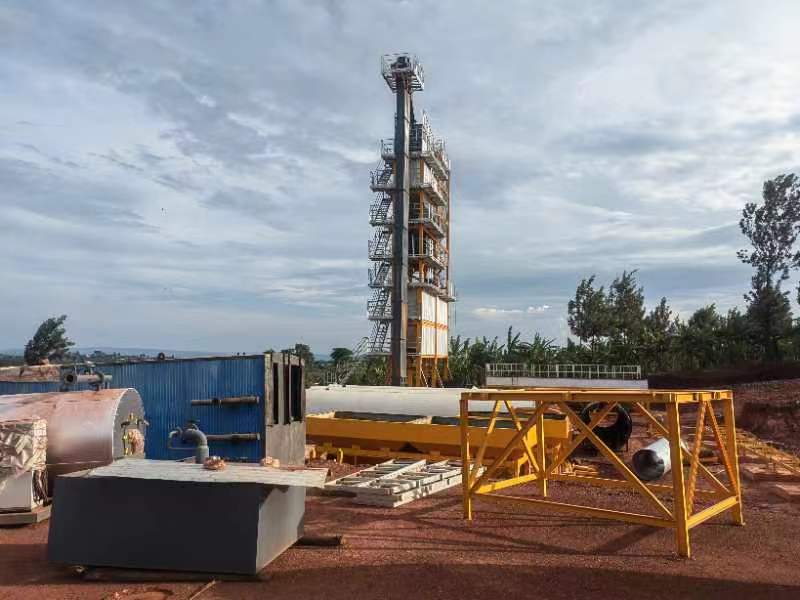
The key equipment of an asphalt mixing plant includes a batching system, drying system, combustion system, hot material elevator, vibrating screen, hot material storage silo, weighing and mixing system, asphalt supply system, powder supply system, dust removal system, finished product silo, and control system, among other components. These components work together to ensure efficient and high-quality production of asphalt mixtures.
III. Classification of Asphalt Mixing Plants.
(I) Based on production capacity, asphalt mixing plants can be divided into small, medium, and large categories. Small mixing plants have a production capacity of less than 40 tons/hour, medium mixing plants have a production capacity between 40 and 400 tons/hour, and large mixing plants have a production capacity exceeding 400 tons/hour.
(II) In addition, asphalt mixing plants can be divided into mobile, semi-stationary, and fixed types based on their transportation method. Mobile mixing plants have silos and mixing pots equipped with tires, making them easy to move with the construction site. They are mainly suitable for county and township roads and low-grade highway projects. Semi-stationary mixing plants have equipment mounted on trailers and assembled at the construction site. They are mostly used in highway construction. Stationary mixing plants, also known as asphalt concrete processing plants, have equipment located in a fixed location and are suitable for centralized projects and urban road construction.

Crack repair technology is to seal the cracks in the pavement to prevent water from penetrating into the pavement structure. It is an effective means to slow down the occurrence of pavement diseases and extend the service life of the pavement. Asphalt concrete pavement crack damage is divided into: fatigue cracks, block cracks, edge cracks, longitudinal cracks, reflective cracks and transverse cracks. Different types of cracks require different crack repair technologies.
Crack repair technology corresponds to the above crack repair materials and can be divided into three categories:
(1) Grouting – Grouting is the most commonly used crack repair method. Grouting refers to a preventive maintenance technology that uses professional equipment (grooving machines, grouting machines, etc.) and special materials (grouting glue) to repair cracks.
Grouting technology generally includes the steps of grooving, cleaning, and grouting. It is mainly used for dynamic cracks.
(2) Filling – Grouting refers to the method of directly filling the cracks with crack repair materials (or simply cleaning the cracks and then filling them) without grooving. Grouting is mainly used for non-dynamic cracks or sections of road that are not suitable for grooving. It is a more traditional crack repair method. (3) Sealing – Sealing is a new crack repair technology. It does not involve grooving or cleaning the cracks. Simply cleaning the crack surface is sufficient for construction.
Crack Repair Process
The mainstream pavement crack repair materials are heated sealants, room temperature sealants (polyurethane, polysulfide, silicone, etc.), and seam tape, which are also being gradually applied and promoted.

1. Various Methods and Precautions for Repairing Cracks in Asphalt Pavements
Asphalt pavements are widely used in many areas due to their durability and cost-effectiveness. However, as these pavements age, cracks or potholes inevitably develop. To ensure the continued use and safety of the pavement, mastering the methods for repairing cracks in asphalt pavements is crucial. Below, we will explore this topic in depth.
1. For minor cracks, approximately 2 mm in width or less, in warm weather, spraying and pressing asphalt can be used to repair the cracks. In cooler weather, an emulsified asphalt seal coat is recommended. Furthermore, to further improve the smoothness of the pavement, asphalt can be applied along the crack path in warm weather; in cooler weather, cationic asphalt can be used.
2. For cracks wider than 2 mm, modified asphalt can be injected and then compacted with coarse sand to ensure effective repair.
Before beginning asphalt pavement repair work, the first step is to remove dust and debris from the cracks to ensure the filler material effectively bonds to the gap. Subsequently, liquefied gas can be used to heat the cracks, which not only softens the asphalt but also increases its viscosity, thereby enhancing the repair effect. The choice of filling material should be based on the actual situation. Commonly used filling materials include cold-filled joint sealants, which penetrate deep into the roadbed and set quickly, making them ideal for asphalt pavement repairs.
2. Analysis of Causes of Asphalt Pavement Cracking:
Asphalt pavement cracking is a complex issue, and its causes may involve multiple factors. First, material properties are a key factor, including the properties of the asphalt itself and the mix ratio of the mixture. Second, environmental factors such as temperature fluctuations, humidity differences, and ground movement can also affect the pavement. Furthermore, traffic loads are a significant cause of pavement cracking. When repairing asphalt pavements, understanding these cracking causes is crucial for implementing effective repair measures.
3. Causes of Transverse Cracks
Transverse cracks are common in asphalt pavements and can be caused by a variety of factors. For example, adverse weather conditions during construction, such as excessively low temperatures or high humidity, can cause the asphalt surface to shrink too quickly, generating tension and forming cracks. On the other hand, improper construction practices can also cause such problems.
4. Causes of Longitudinal Cracks
Longitudinal cracks in asphalt pavements are also a serious concern. Their formation is often related to a variety of factors. First, poor material quality, including the use of substandard asphalt mixtures, can be a key factor. Second, substandard compaction practices can lead to uneven pavement structure, which can cause cracks. Furthermore, issues such as excessively deep side ditches or improper cold joint treatment can also contribute to longitudinal cracks.
5. Network Cracks
Network cracks in asphalt pavements are often associated with low temperatures and freezing water intrusion in northern China. Insufficient mixing time for the mixture, aging of the asphalt due to expiration, or loosening of the pavement interlayer, resulting in insufficient overall pavement strength, can also contribute to the initial formation of network cracks, which then gradually expand.
Summary: This article introduces methods for repairing cracks in asphalt pavements and their causes. We hope this information will provide practical assistance to those facing these challenges. For further information, please stay tuned to the latest developments in highway maintenance technology.

Slurry seal is a common pavement surface treatment method that uses special slurry materials and construction techniques to maintain and repair pavements. Its advantages include cost-effectiveness, environmental friendliness, and improved pavement performance, making it widely used in pavement engineering.
1. Overview of Slurry Seal Treatment
Slurry seal is a pavement surface treatment technique that uses special slurry materials. This treatment technique involves laying a layer of slurry material on the pavement surface to achieve pavement maintenance and repair. Slurry seal offers advantages such as cost-effectiveness, environmental friendliness, and ease of construction, making it widely used in pavement engineering.
2. Characteristics of Slurry Seal Treatment
1. Cost-Effectiveness: Compared to traditional pavement maintenance methods, slurry seal is less expensive and can effectively reduce maintenance costs.
2. Environmental friendliness: Slurry seal uses primarily environmentally friendly materials, resulting in minimal environmental impact and meeting the requirements of green development.
3. Ease of Construction: Slurry seal offers a simple construction process and a short construction period, quickly restoring pavement performance.
III. Slurry Seal Treatment Process
1. Road Cleaning: Before construction, the road surface must be cleaned to ensure it is clean and free of debris.
2. Slurry Material Laying: The slurry material is laid on the road surface, ensuring it is evenly applied and without any gaps.
3. Compaction: After the slurry material is laid, it is compacted using a roller to ensure it is firmly bonded to the road surface.
IV. Application and Benefits of Slurry Seal Treatment
Slurry seal treatment is widely used in practical projects, and its benefits are primarily reflected in the following aspects:
1. Improving Pavement Performance: Slurry seal treatment can effectively enhance pavement performance, such as skid resistance, wear resistance, and water resistance, improving pavement performance.
2. Extending Pavement Life: Slurry seal treatment effectively protects the pavement, delaying aging and damage, and extending its service life.
3. Improving Pavement Aesthetics: Slurry seal treatment creates a smooth and aesthetically pleasing surface, enhancing the overall appearance of the pavement.
In summary, slurry seal, as an economical and environmentally friendly pavement surface treatment method, has broad application prospects in pavement engineering. With the continuous advancement of technology and the continuous upgrading of materials, slurry seal will play an even greater role in the field of pavement maintenance.

Asphalt is widely used in road construction, primarily for paving. Its advantages include the following:
Good adhesion: It bonds firmly with aggregate, tightly binding aggregate particles together to form a stable pavement structure that effectively resists damage from vehicle loads and natural factors.
Good waterproofing: Asphalt is impermeable, preventing rainwater from penetrating the pavement structure, protecting the roadbed and base layer from water erosion, and extending the service life of the road.
High smoothness: The paved road surface has good smoothness, providing a smooth driving surface for vehicles, reducing bumps and vibrations during driving, and improving driving comfort.
-Excellent skid resistance: Through the appropriate selection of aggregates and mix design, asphalt pavements can achieve excellent skid resistance, ensuring sufficient friction for vehicles in both wet and dry conditions, ensuring safe driving.
Easy to repair: Local damage is easy to repair, and can be repaired using hot or cold patching methods. The repaired pavement adheres well to the original surface and can be quickly restored to service. Convenient Construction: Asphalt pavement construction is relatively simple and can be quickly paved using mechanical equipment such as pavers. Traffic can be reopened relatively quickly after construction, minimizing impact on traffic.
Good Noise Reduction: Compared to cement concrete pavement, asphalt pavement effectively absorbs vehicle noise, reducing traffic noise pollution and improving the surrounding environment.

Gravel Synchronized seal Trucks are essential road construction equipment. Regular maintenance and care are essential to ensure proper operation and extend their service life. This article provides a maintenance and care guide for Gravel Synchronized seal Trucks to help users manage their equipment correctly on a daily basis.
Cleaning and Lubrication:
Gravel Synchronized seal Trucks accumulate dust, sand, and other impurities during use, so regular cleaning is crucial. Use a high-pressure water jet or detergent to thoroughly clean the vehicle, especially the hydraulic system and feed mechanism.
Regularly check the hydraulic system fluid to ensure cleanliness and proper fill level. Replace the hydraulic fluid according to the manufacturer’s recommendations and regularly check the fluid viscosity and pressure.
Inspection and Repair:
Regularly inspect key components of the gravel truck, such as the hydraulic cylinder, conveyor belt, and vibrator. Ensure they are in good working condition and free of leaks, looseness, or wear.
Inspect the feed port and distribution mechanism to ensure even discharge and distribution of gravel. Repair or replace any damaged, clogged, or loose components. Check the vehicle’s tires and brake system to ensure they are in good condition. Replace tires as needed and adjust and maintain the brake system.
Regular Maintenance:
Develop a regular maintenance schedule based on the equipment manufacturer’s maintenance manual. This includes replacing filters, cleaning or replacing the air filter, and inspecting and adjusting the drive chain.
Regularly check the electrical system and instrument panel to ensure the accuracy and display of the instruments.
Cooperate with professionals for regular comprehensive inspections and maintenance, including pressure testing the hydraulic system and inspecting and adjusting the drive system.
Proper maintenance and care can keep your gravel truck in good working condition, improving construction efficiency and extending its lifespan. Users should follow the manufacturer’s requirements and instructions to develop a reasonable maintenance schedule. During use, be aware of any abnormalities and promptly address and repair them.

Energy conservation and environmental protection are also excellent ways for Chinese companies to break down foreign trade barriers. By the end of 2011, the annual fuel consumption of my country’s construction machinery products exceeded the total annual output value of construction machinery. Currently, market entry barriers in countries like the United States and Japan are rising, and emission standards are a primary concern among these trade barriers. Industry experts believe that energy conservation and emission reduction in the construction machinery industry are challenging, often hindered by technical bottlenecks. Therefore, increasing research and development efforts is an effective way to address this situation. Energy conservation and environmental protection are the inevitable trends in the development of China’s construction machinery industry.
Whether it is to reduce environmental burdens or break down foreign trade barriers, energy conservation and environmental protection will become the mainstream trend in the development of construction machinery. The future development of China’s construction machinery industry will place greater emphasis on transformation and upgrading, and energy conservation and environmental protection will be a key focus in its implementation strategies. Currently, construction machinery manufacturers are incorporating more energy-saving and environmental protection elements into their new products. At the just-concluded biennial Shanghai Bauma Show, renowned international construction machinery companies like Komatsu, Hyundai, and Volvo Construction Equipment, as well as Chinese construction machinery giants like Sany, XCMG, Zoomlion, and Liugong, showcased their latest equipment, all boasting enhanced energy-saving and environmental performance. This demonstrates that the future of construction machinery will inevitably be dominated by energy conservation and environmental protection. Construction machinery companies must prioritize their own efforts to achieve higher product efficiency and superior energy-saving and consumption-reduction performance.

Asphalt distributors can spray, lay, and compact asphalt, improving construction efficiency and ensuring project quality.
Asphalt distributors play a crucial role in modern road construction. They not only efficiently apply asphalt but also assist with laying and compacting, providing strong technical support for road construction. So, how do asphalt distributors accomplish these three key tasks? Let’s take a closer look.
1. Asphalt Spraying: Uniform and Efficient, Improving Project Quality
One of the primary functions of an asphalt distributor is to spray asphalt. It evenly applies asphalt to the road surface, ensuring the thickness and uniformity of the asphalt layer meet design requirements. During the spraying process, the asphalt distributor can adjust the spraying speed and volume according to actual needs to meet varying road conditions and construction requirements. Furthermore, asphalt distributors are equipped with advanced control systems that precisely control the amount of asphalt sprayed, avoiding waste and pollution.
2. Asphalt Paving: Smooth and Dense Paving, Improving Road Performance
After spraying asphalt, asphalt distributors can also perform asphalt paving. It quickly spreads the asphalt sprayed on the road surface and, through vibration or rolling, makes the asphalt layer denser and smoother. This step is crucial for improving the road’s smoothness, density, and skid resistance. The asphalt spreader’s laying process ensures that the asphalt layer is tightly bonded to the base layer, forming a complete pavement structure.

To extend the service life of the dust collector bag in the asphalt mixing plant, maintenance can be carried out from the following aspects:
Daily operation and maintenance
Control operating parameters: strictly control the operating temperature, pressure and air volume of the dust collector to avoid excessively high or low temperature, excessive pressure fluctuations and air volume overload. Generally speaking, the operating temperature of the dust collector in the asphalt mixing plant should be controlled between 120℃-180℃.
Regularly check the cleaning system: ensure the normal operation of the cleaning device, such as the pulse valve, cylinder and other components are fault-free, and the cleaning time and cycle are set reasonably. Regularly check the pressure of the pulse injection system to ensure that the injection pressure is between 0.4-0.6MPa to achieve the best cleaning effect.
Timely deal with leakage problems: Regularly check the sealing of the dust collector, promptly discover and repair leakage points in pipes, flanges, inspection doors and other parts, and prevent dust-containing gas from short-circuiting and wearing the bags.
Regular maintenance
Check the appearance of the bag: Open the dust collector inspection door regularly to check whether the bag is damaged, deformed, blocked or stuck. If a small area of individual bags is found to be damaged, they can be repaired in time; if the damage is serious, new bags need to be replaced.
Clean the surface of the bag: According to the blockage of the bag, compressed air can be used regularly for reverse blowing and cleaning, or special cleaning equipment can be used to clean the surface of the bag to remove dust.
Replace wearing parts: Other wearing parts of the dust collector, such as the filter bag frame, venturi, etc., should also be checked and replaced regularly to ensure the overall performance of the dust collector.
Storage and installation
Proper storage: Unused bags should be stored in a dry and ventilated environment to avoid moisture, rain and direct sunlight to prevent aging of the bag material.
Standard installation: When installing the bag, be careful to avoid contact between the bag and sharp objects to prevent scratches. At the same time, ensure that the bag is firmly installed and well sealed with the flower plate hole to prevent the bag from being worn or falling off due to looseness.

In the field of road construction, the technical adaptability of emulsified asphalt production equipment directly affects the efficiency of the project. This article analyzes the technical path for efficient production from three dimensions: equipment selection, core components, and cross-industry technology migration.
I. Equipment type and technical adaptability
Mainstream equipment is divided into mobile and fixed types. The ZMLR6000 equipment adopts a 304 stainless steel tank and a thermal oil heating system. The ±0.5% ratio accuracy meets the fineness requirements of high-grade roads ≤5μm, which is suitable for field operations. The YK6 unit realizes dual-mode heating through the RH6 colloid mill, heats to 100℃ within 45 minutes, supports continuous production of 20%-70% solid content, and has a daily production capacity of 120 tons, which is more suitable for small and medium-sized projects.
II. Core component technology breakthroughs
1. High-speed shear system: The German imported colloid mill adopts a stepped internal tooth structure with a rotation speed of 10,000rpm. The 0.05mm shear gap ensures that the asphalt particles are refined to 1-5μm, and the emulsion stability is improved by 30%.
2. Temperature control and energy-saving design: The waste heat recovery system reduces energy consumption by 30%, the 10㎡ heat exchanger achieves closed-loop energy conservation, and the ±0.5℃ temperature control accuracy can simulate the long-term aging process of asphalt.
3. Intelligent control system: The Internet of Things module supports remote early warning, and the SCADA system integrates 32 temperature sensors. The temperature difference is monitored in real time through dynamic thermal imaging, and the solid content deviation is controlled within ±1%.

With increasingly stringent environmental protection policies, asphalt mixing stations face severe challenges such as excessive dust and exhaust gas emissions. How to achieve standard production through efficient and environmentally friendly transformation while controlling costs? This article will reveal three core transformation plans to help mixing stations achieve a direct reduction of more than 80% in emissions, combining economy and compliance!
1. Dust control: Upgrade pulse bag dust removal system
Traditional dust removal equipment is difficult to cope with high humidity and high viscosity dust in asphalt stations, which can easily cause filter bags to compact. The transformation plan includes:
Filter material upgrade: Use oil-proof and waterproof coated filter bags, which can withstand 240℃ high-temperature asphalt flue gas and extend the service life by 2 times.
Intelligent cleaning: Equipped with a 0.5MPa high-pressure pulse backflush device, the cleaning frequency is automatically adjusted according to the pressure difference, and the dust capture efficiency exceeds 99%.
Seal transformation: Install double-layer soft curtain seals on dust-raising points such as silos and conveyor belts to reduce unorganized emissions.
Transformation effect: dust emission concentration dropped from 100mg/m3 to below 10mg/m3, which is better than the national standard.
With increasingly stringent environmental protection policies, asphalt mixing plants face severe challenges such as excessive dust and exhaust gas emissions. How to achieve standard production through efficient and environmentally friendly transformation while controlling costs? This article will reveal three core transformation solutions to help mixing stations achieve a direct reduction of more than 80% in emissions, combining economy and compliance!

What are the methods for repairing cracks in asphalt pavement? Asphalt pavement is a widely used pavement material in modern road construction, with high strength and durability. However, as time goes by and the frequency of use increases, cracks will inevitably appear in asphalt pavement. So, what are the methods for repairing cracks in asphalt pavement?
What are the methods for repairing cracks in asphalt pavement?
1. Oil filling repair method
This repair method is mainly for smaller cracks or cracks. First, clean the damaged part, then soften the asphalt pavement with a liquefied gas tank, and then pour the thick asphalt into the cracks, and flatten it with a soldering iron, and then carry out normal pavement maintenance. The oil filling repair method is one of the methods for repairing cracks in asphalt pavement, and it is also one of the most commonly used repair methods.
2. Emulsified asphalt seal repair method
This method is mainly for minor cracks or loose cracks. Use a machine to apply a layer of emulsified asphalt on the ground, then sprinkle some stone chips, and finally roll it. This repair method can be constructed on rainy days, with a fast construction speed, and can handle minor crack problems.
3. Cold-patch asphalt mixture repair method
Cold-patch asphalt mixture is one of the asphalt pavement repair materials with good adhesion, wear resistance, and skid resistance. This material is suitable for the repair of various asphalt pavements. It is easy to use and can be quickly opened to traffic after repair, reducing construction time. The color of the cold-patch asphalt mixture is also very different from the original pavement, which can be clearly distinguished and convenient for construction operations.

The asphalt mixing equipment mentioned here may also refer to an asphalt concrete mixing station. At present, asphalt mixing equipment generally uses a complete set of equipment for mixing. So what are the benefits of using a complete set of equipment?
1. More effective.
In today’s industrial production, a complete set of asphalt mixing equipment can help improve production efficiency and ensure product quality. This is why even in a mixing station, the equipment used is a complete set of equipment.
2. Ensure quality.
When mixing asphalt, a certain ratio is set. For this type of asphalt liquid used in different occasions, its ratio control has strict requirements. It is necessary to determine its mixing method and mixing time to ensure that the asphalt liquid is consistent with the production site. One of the advantages of a mixing station is that the quality can be effectively controlled.
3. It can be sampled.
After mixing at the mixing station, the quality inspector can sample and inspect to ensure that the mixed asphalt liquid meets the use requirements.
In short, asphalt mixing equipment will use a complete set of equipment, mainly to facilitate the later asphalt to meet production needs. Through the mixing station, the mixing time and feeding sequence can be better controlled, so that the mixed product can meet different use requirements. And after using the archiving equipment, effective spot checks can be carried out, which can better ensure that the quality meets the construction requirements.

Highway preventive maintenance construction methods and application scenarios are key measures to ensure the long-term performance of highways and extend their service life. The following are common construction methods and their application scenarios:
1. Micro-surfacing
Construction method: Mix emulsified asphalt, aggregate, filler, etc. and spread them on the road surface to form a thin layer of protection.
Application scenario: Suitable for roads with slight cracks and slight rutting, which can effectively prevent water and slip and delay aging.
2. Slurry seal
Construction method: Spread with emulsified asphalt, aggregate and other mixtures to form a thicker protective layer.
Application scenario: Suitable for moderate cracks and rutting, with significant waterproof and anti-slip effects, and often used on roads with heavy traffic.
3. Mist seal
Construction method: Spray emulsified asphalt or regeneration agent to penetrate the road surface and restore the asphalt performance.
Application scenario: Suitable for aging and slightly cracked roads, which can effectively seal small cracks and delay further damage.
4. Chip seal
Construction method: first spray asphalt, then cover with gravel, and roll to form a protective layer.
Application scenario: suitable for moderately damaged roads, with good waterproof and anti-skid effects, often used in rural or low-traffic roads.
5. Thin layer overlay
Construction method: lay a thin layer of hot-mixed asphalt mixture to form a new pavement layer.
Application scenario: suitable for moderate cracks and rutting, which can significantly improve the smoothness and anti-skid performance of the road surface.
6. Crack sealing
Construction method: use asphalt or rubber materials to fill cracks to prevent water penetration.
Application scenario: suitable for roads with obvious cracks, which can effectively prevent crack expansion and water intrusion.
7. Pavement regeneration
Construction method: reuse old pavement materials through cold regeneration or hot regeneration technology.
Application scenario: suitable for roads with large-scale damage, which can save materials and extend service life.
8. Local repair
Construction method: repair the local damaged area to restore the smoothness of the road surface.
Application scenarios: Suitable for local potholes, cracks, etc., and can quickly restore the function of the road surface.
9. Anti-skid treatment
Construction method: Improve the friction coefficient of the road surface by grooving or laying an anti-skid layer.
Application scenarios: Suitable for slippery sections, such as curves and ramps, which can significantly improve driving safety.
10. Drainage treatment
Construction method: Improve drainage facilities, such as adding drainage ditches and permeable pavements.
Application scenarios: Suitable for sections with serious water accumulation, which can effectively prevent water damage and extend the life of the road surface.
Summary
There are various methods for highway preventive maintenance construction, and the selection should be based on comprehensive considerations of factors such as the degree of road damage, traffic volume, and climate. Reasonable preventive maintenance can not only extend the life of the road, but also improve driving safety and comfort.

The function of slurry seal is to use appropriately graded stone chips or sand, fillers (cement, lime, fly ash, stone powder, etc.) and emulsified asphalt, admixtures and water, and mix them in a certain proportion to form a flowing asphalt mixture, which is evenly spread on the road surface to form an asphalt seal. This seal is mainly used for roads in rainy areas, especially when the gaps in the asphalt surface layer are large and easy to seep water, the slurry seal can effectively solve this problem.
In addition, after the base layer is laid, if the asphalt surface layer cannot be laid in time and traffic needs to be opened, the slurry seal also plays a key role. It can temporarily close the road surface to prevent rainwater from penetrating, while protecting the base layer from damage. The slurry seal has strong fluidity and can better adapt to various road conditions to ensure construction quality and efficiency.
Compared with the viscous seal, the slurry seal has higher adaptability and flexibility. Due to its poor fluidity, the viscous seal is more difficult to spread evenly during construction, and it is more likely to flow in a humid environment, affecting the construction effect. The slurry seal, due to its strong fluidity, can better cover the entire road surface and ensure the uniformity and integrity of the seal.
In practical applications, the slurry seal also has the advantages of fast construction speed and low cost. Due to its good fluidity, less equipment and manpower are required during construction, which greatly shortens the construction period. In addition, the material cost of the slurry seal is relatively low, which effectively controls the overall construction cost.
Therefore, when choosing the seal material, the slurry seal has become a more ideal choice due to its excellent performance and economy. Whether it is for road maintenance in rainy areas or for base protection, the slurry seal can play an important role in ensuring the safety and service life of the road.