Bitumen is a polymer mixture composed of asphaltene, colloid, aromatic hydrocarbons and saturated hydrocarbons. Asphaltene is dispersed in aromatic hydrocarbons and saturated hydrocarbons with the help of colloid to form a colloidal structure. When the asphaltene content is low, the bitumen has good adhesion, plasticity and fluidity, but poor temperature stability and elasticity
Bitumen modification principle:
Bitumen is a polymer mixture composed of asphaltene, colloid, aromatic hydrocarbons and saturated hydrocarbons. Asphaltene is dispersed in aromatic hydrocarbons and saturated hydrocarbons with the help of colloid to form a colloidal structure. When the asphaltene content is low, the bitumen has good adhesion, plasticity and fluidity, but poor temperature stability and elasticity. The polymer modifier is similar to the asphaltene in bitumen. Its addition, after fully swelling with bitumen, absorbs the aromatic hydrocarbons and colloid in bitumen to form a new colloid, which not only retains or increases the adhesion, plasticity and fluidity of the original bitumen, but also improves the temperature stability and elasticity of bitumen, thereby achieving the purpose of improving the road performance of bitumen.
Bitumen modification process:
The modifier and additive are evenly and finely dispersed into the matrix bitumen, and the contact area between the original bitumen and the modifier is increased as much as possible to ensure full swelling and development, which not only improves the utilization rate of the modifier but also makes the original bitumen performance the most perfect improvement.
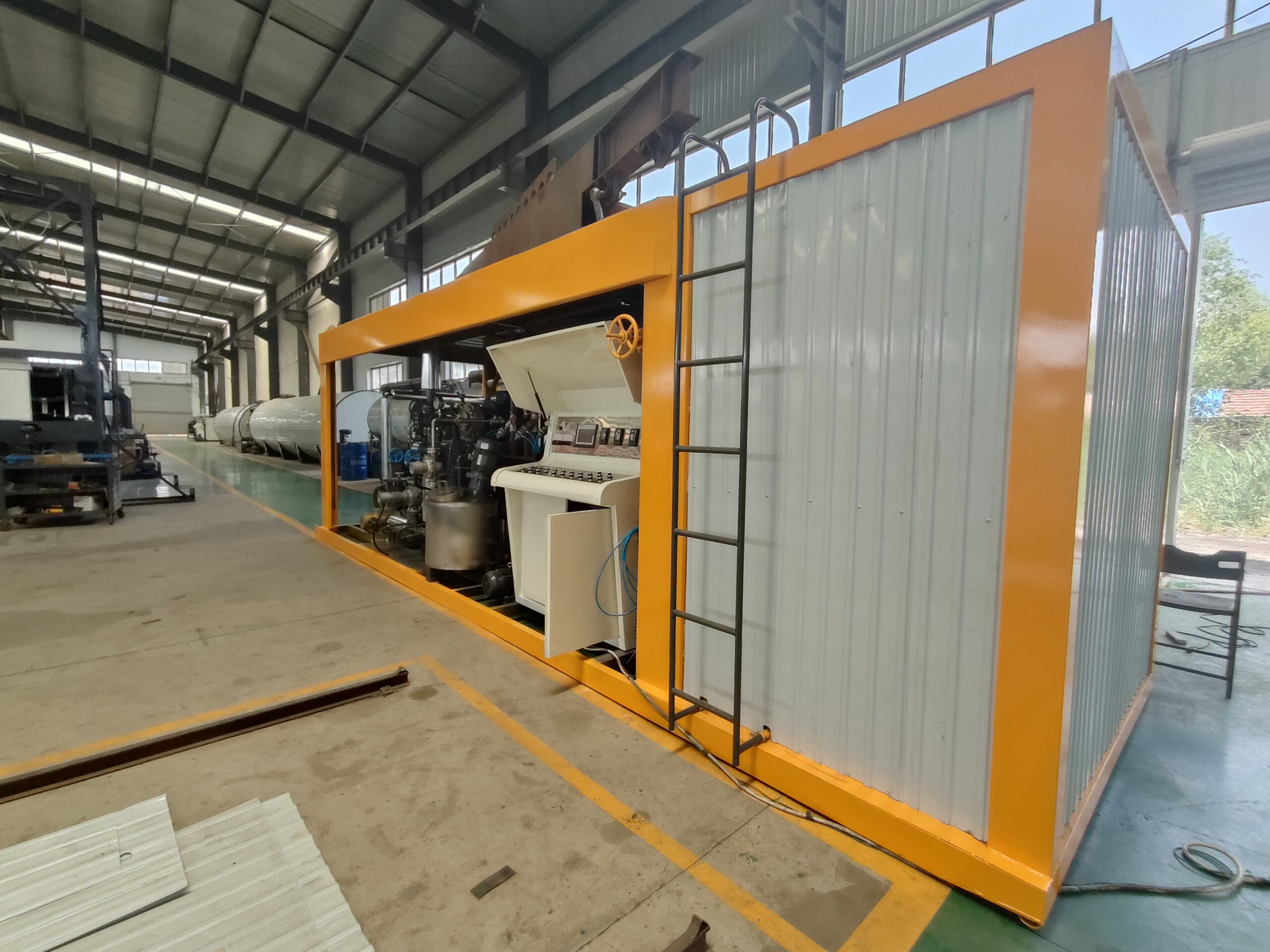
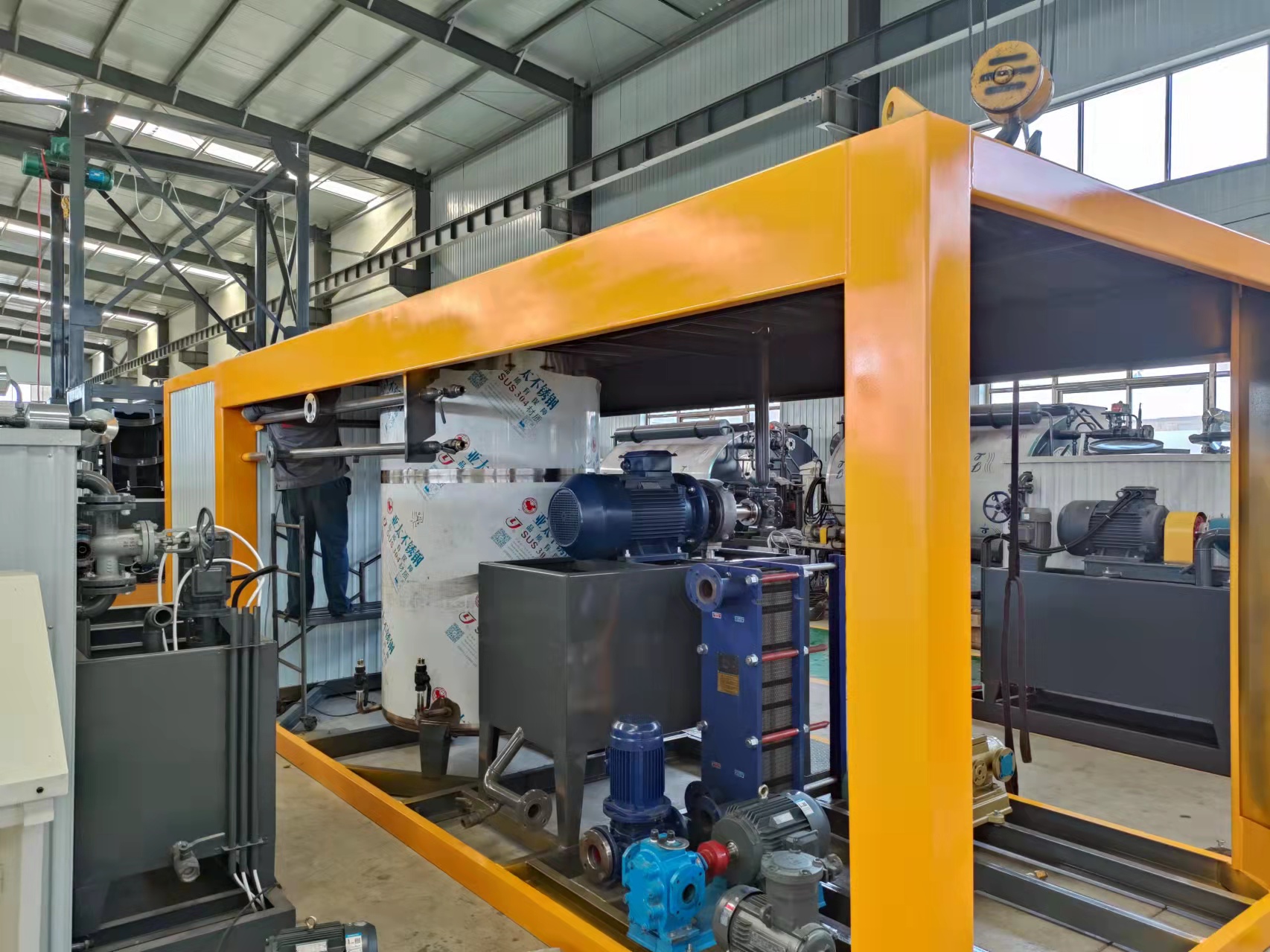
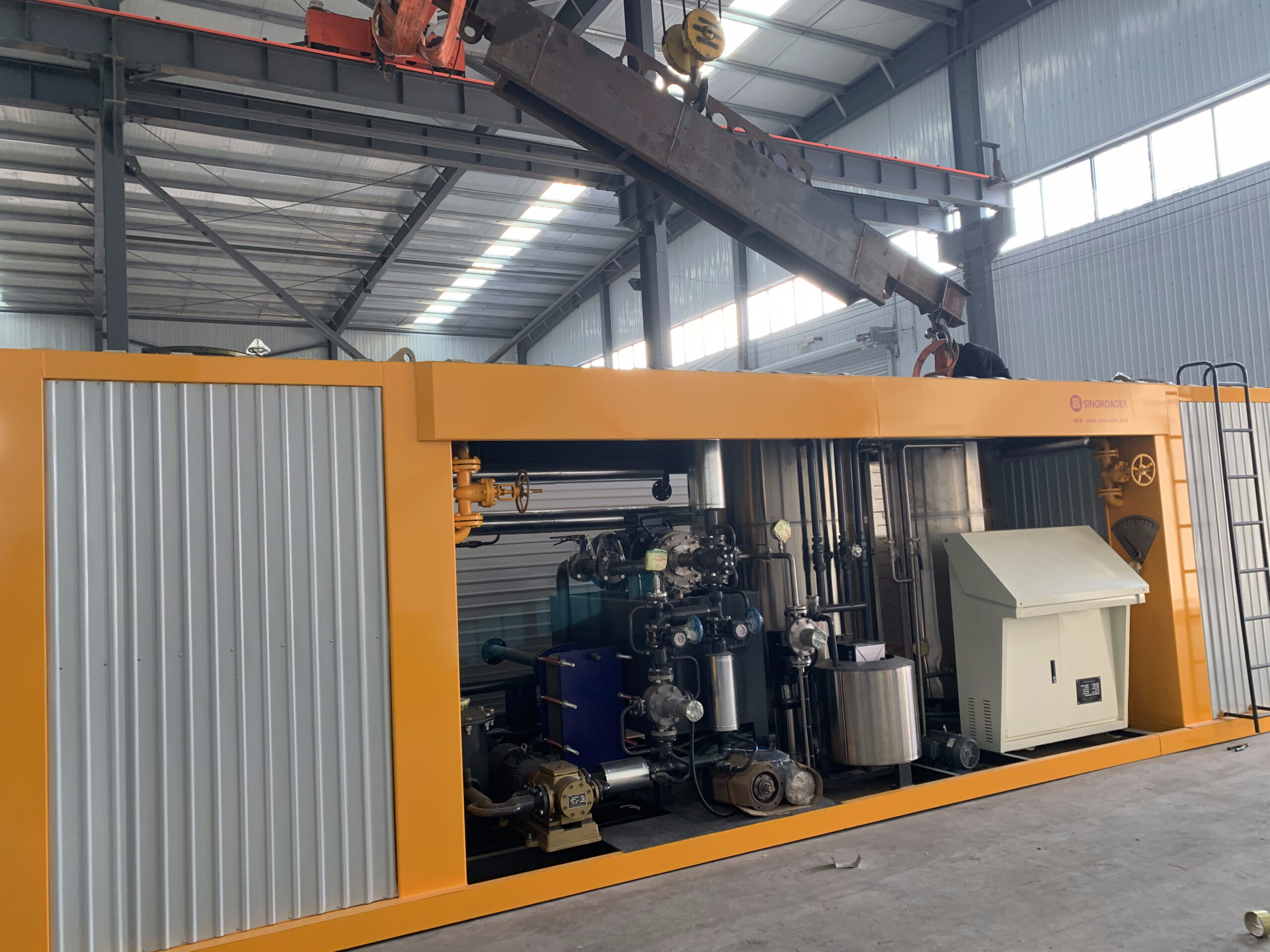
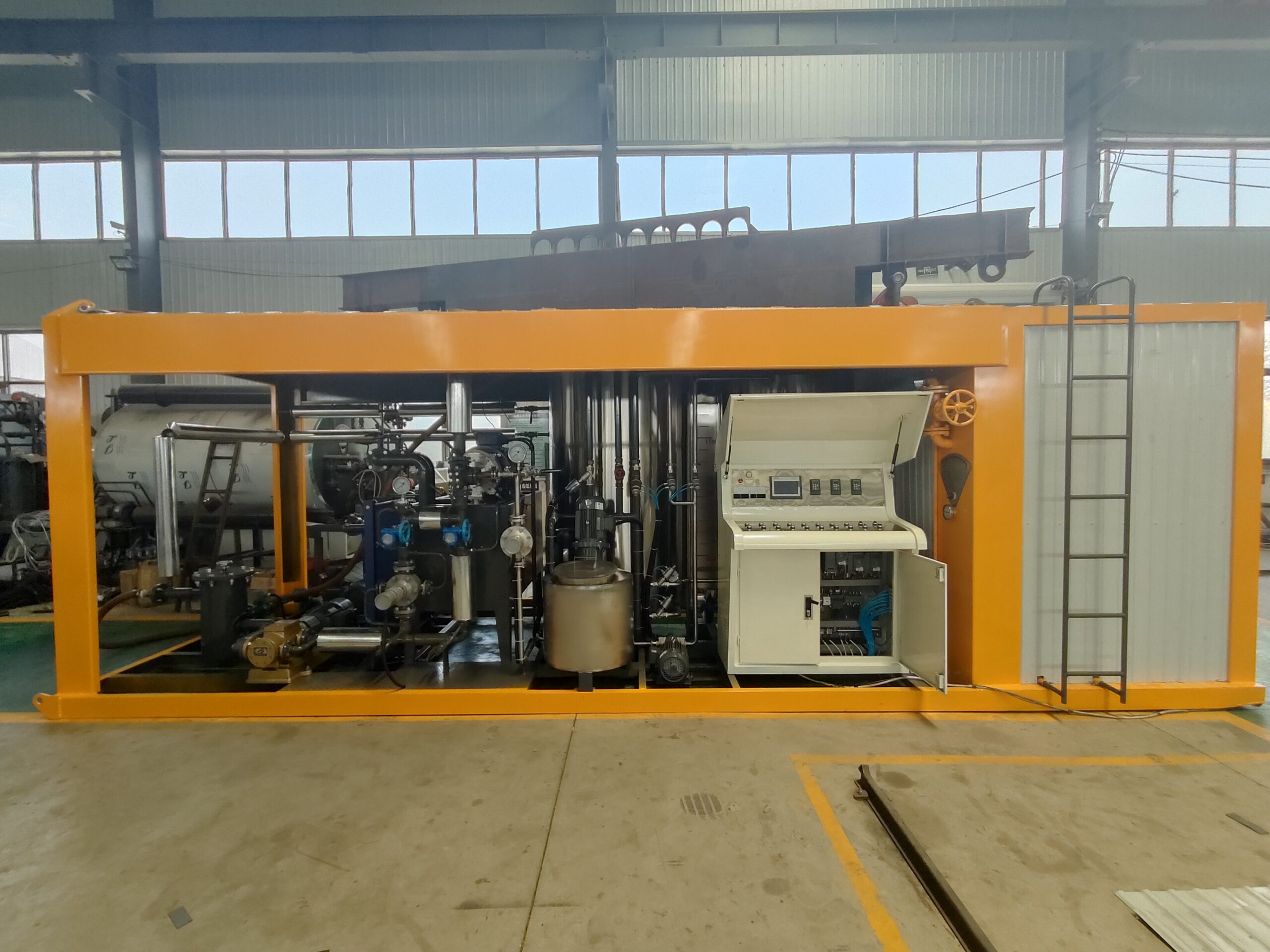
The modified bitumen complete production equipment has the following advantages:
1. It is suitable for a variety of modifiers, such as SBS, EVA, PE, etc.;
2. The ratio of modifier to bitumen can be set at any time according to user needs;
3. The production volume of each cycle can be set arbitrarily within the maximum productivity;
4. The modified bitumen has high quality, and the modifier has a small particle size and uniform distribution after emulsification;
5. The production process is fully automatically controlled, and the production records can be queried at any time;
6. The weighing system is accurate in measurement, and the weighing error is less than 1%;